


Views: 0 Author: Site Editor Publish Time: 2026-07-30 Origin: Site


The functional lifespan of consumer cookware, medical devices, and industrial equipment hinges entirely on the integrity of their surface engineering. For product engineers and procurement teams, selecting a partner or specifying a methodology involves balancing unit economics with strict regulatory compliance and long-term durability. Poorly specified coatings lead to delamination, product recalls, and brand damage. This guide breaks down the complete Non-Stick Coating Manufacturing process—from substrate preparation to final thermal curing. It provides a technical framework to evaluate methodologies, mitigate production risks, and select capable partners. You will find actionable data on substrate compatibility, thermal processing parameters, and quality assurance protocols required to maintain high yield rates on the production floor.
Establish measurable criteria for success before initiating the coating process. Key metrics include required contact angles for hydrophobicity and oleophobicity, continuous operating temperatures, and abrasion resistance thresholds. Clear baselines ensure the final product meets functional requirements under real-world conditions. We measure contact angles using a goniometer, targeting specific degrees depending on the fluid resistance required. Operating temperatures dictate the polymer choice; exceeding these limits causes rapid degradation of the non-stick matrix.
Different base metals react uniquely to high-temperature thermal processing and chemical preparation. Cast aluminum, stamped aluminum, stainless steel, carbon steel, and copper each require specific handling. Understanding metallurgical properties prevents warping during curing and ensures optimal primer adhesion. For instance, cast aluminum holds heat differently than thin-gauge stamped aluminum, requiring adjusted oven dwell times.
| Substrate Material | Preparation Method | Thermal Considerations | Common Applications |
|---|---|---|---|
| Cast Aluminum | Alkaline wash, heavy grit blast | High heat retention, requires longer cooling | Premium cookware, industrial molds |
| Stamped Aluminum | Acid etch, light grit blast | Prone to warping at high temperatures | Baking sheets, consumer pans |
| Stainless Steel | Aggressive grit blast (aluminum oxide) | Excellent stability, poor natural adhesion | Medical devices, commercial food prep |
| Carbon Steel | Phosphating, grit blast | High risk of flash rust before primer | Woks, heavy-duty baking tins |
FDA, REACH, and RoHS standards heavily impact material selection. The industry shift away from PFOA/PFOS necessitates strict management of PFAS-free claims. Compliance dictates which chemical formulations are viable for consumer and medical applications, directly influencing the entire supply chain. Facilities must maintain updated safety data sheets and migration test results for every batch of polymer dispersion received.
Evaluate how part geometry, production volume, and throughput requirements dictate the choice between automated and batch processing lines. High-volume, simple geometries often benefit from automated coil coating, while complex parts may require robotic spray systems or specialized batch processing. An OEM must align their product design with the physical limitations of the coating line to avoid bottlenecks.
Removing machining oils, oxidation, and particulate matter is the first physical step on the line. This involves alkaline baths or thermal burn-off ovens. Residual contaminants pose a severe implementation risk, preventing primer bonding and causing premature coating failure. Operators monitor bath concentration and temperature hourly.
Surface tension testing, or Dyne level measurement, verifies the complete removal of organic contaminants. This verification step must occur before proceeding to mechanical profiling to ensure the substrate is perfectly clean. We apply indicator fluids of known surface tension; if the fluid beads up, organic residue remains, and the part goes back to the wash line.
Aluminum oxide or steel grit creates a specific surface roughness. The Ra profile is typically targeted between 2.5 to 4.0 µm. This roughness provides a mechanical "tooth" necessary for the coating to grip the metal substrate securely. Blast pressure, media size, and nozzle distance are strictly controlled parameters.
Anodizing aluminum or phosphating steel prevents sub-film corrosion. This chemical surface treatment enhances primer adhesion, creating a stable foundation for subsequent layers. Phosphating creates a crystalline conversion layer that locks the primer into the metal matrix.
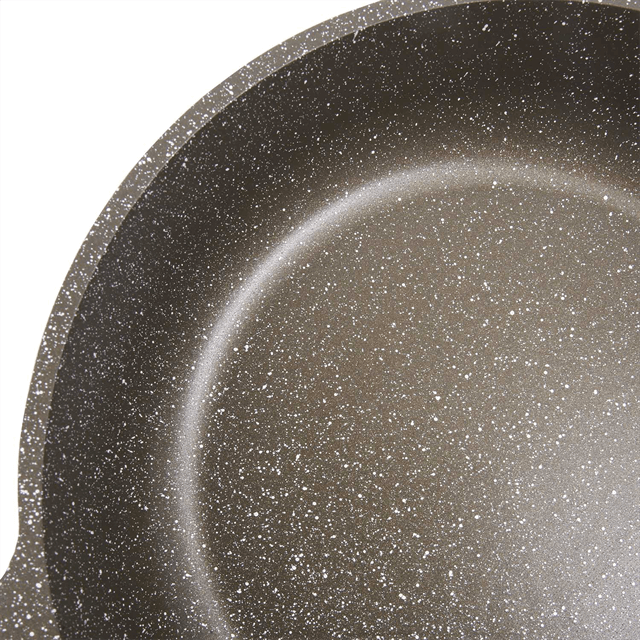
Primers act as the bridge between the rigid metallic substrate and the flexible non-stick topcoat. Without a properly formulated primer, the topcoat will eventually delaminate under thermal or mechanical stress. The primer absorbs the differing rates of thermal expansion between the metal and the fluoropolymer.
Primer formulations include binder resins like Polyamide-imide (PAI) or Polyethersulfone (PES). These resins adhere firmly to metal while bonding chemically with the subsequent fluoropolymer or ceramic layers, ensuring a cohesive system. PAI requires a specific temperature threshold to cross-link, which must be factored into the final bake cycle.
High-tolerance areas, threads, and electrical contact points often require masking. Precision masking methodologies ensure coating application is prohibited in these specific zones, maintaining part functionality and dimensional accuracy. We use custom-molded silicone plugs and high-temperature polyimide tapes for this task.
Automated robotic spray systems handle complex geometries effectively, while coil coating suits flat stock. The choice of technique impacts transfer efficiency and material waste, directly affecting production costs and throughput. HVLP (High Volume Low Pressure) spray guns are standard for liquid dispersions to minimize overspray.
Traditional systems often use a 2-coat or 3-coat approach. Midcoats provide abrasion resistance and are frequently reinforced with titanium or mica. Topcoats deliver pure release properties, ensuring the non-stick functionality. The stratification of these layers happens during the curing process, where the lighter PTFE particles float to the surface.
The sol-gel process transitions liquid precursors, like silicon alkoxides, into a solid silica-based network via hydrolysis and condensation polymerization. Ceramic offers higher heat resistance and a harder finish but typically loses its non-stick release properties faster than PTFE under heavy use. Sol-gel coatings cure at much lower temperatures, saving energy on the production line.
Measuring Wet Film Thickness (WFT) immediately after application prevents defects like sagging, mud-cracking, or inadequate coverage. Operators use a standardized WFT comb gauge on sample parts from every rack. Adjustments to fluid pressure or line speed are made in real-time based on these readings.
Applying water or solvent-borne liquid dispersions differs operationally from electrostatic powder coating methods. Each method has specific equipment requirements, environmental considerations, and finish characteristics. Powder coating eliminates VOC emissions entirely but struggles to achieve the ultra-thin film builds possible with liquid dispersions.
A low-temperature baking phase safely removes water or VOC solvents. This flash-off period prevents blistering the wet film during the subsequent high-heat curing stage. Typical flash-off temperatures range from 80°C to 150°C, depending on the carrier fluid used in the formulation.
Convection curing ovens and infrared (IR) curing systems offer different efficiencies and uniformities. The choice depends heavily on part geometry and the specific thermal profile required by the coating formulation. IR systems provide rapid surface heating, ideal for flat panels, while convection ovens ensure even heating for complex, three-dimensional parts.
The curing phase, often between 400°C and 430°C for PTFE, causes polymer particles to melt, flow, coalesce, and cross-link. This transforms the applied layers into a continuous, impermeable film. Oven profiling using trailing thermocouples is mandatory to verify that the metal substrate reaches the target temperature, not just the ambient air.
Controlled cooling rates manage polymer crystallization and minimize internal stress. Proper cooling prevents warping of the substrate and thermal shock to the coating, ensuring long-term durability. Rapid quenching can lock in a highly amorphous structure, while slow cooling promotes crystallinity, affecting the final hardness and permeability of the film.
Industry-standard tests, like the Cross-Hatch Tape Test (ASTM D3359), verify the bond between the substrate, primer, and topcoat. Strong adhesion is the foundation of coating longevity. A specialized cutting tool scores a grid into the coating, aggressive tape is applied and removed, and the grid is inspected for delamination.
Solvent resistance testing, such as the MEK rub test, and Differential Scanning Calorimetry (DSC) confirm complete polymerization and sintering. These tests ensure the coating has achieved its full chemical and physical properties. An under-cured coating will dissolve or soften when exposed to methyl ethyl ketone.
Taber Abrasion testing, linear wear testing, and localized scratch tests simulate lifecycle wear. Standards like BS EN 12983-1 for cookware help quantify the coating's ability to withstand daily use. We run these tests on flat panels coated simultaneously with the production batch.
Measuring water and oil contact angles quantifies the exact non-stick performance of the finished batch. High contact angles indicate strong hydrophobic and oleophobic properties. We also perform practical tests, such as the burnt milk test or the fried egg test, to validate real-world performance.
Non-destructive eddy current or magnetic induction gauges ensure the Dry Film Thickness (DFT) meets specifications across all critical surfaces. Consistent thickness is required for uniform performance. Too thin, and the coating wears prematurely; too thick, and it becomes prone to mud-cracking and cohesive failure.
Partners must utilize formalized quality systems like ISO 9001, AS9100, or ISO 13485. They should also be capable of managing PPAP (Production Part Approval Process) submissions to ensure consistent manufacturing quality. A robust PPAP includes control plans, FMEA (Failure Mode and Effects Analysis), and dimensional layouts.
Assess the risks of raw material shortages, especially for high-grade fluoropolymers. Reliable partners maintain secondary suppliers to mitigate supply chain disruptions and ensure continuous production. Ask for documentation on their inventory management and safety stock levels for critical resins.
Top-tier manufacturers utilize automated optical inspection (AOI) and strict environmental controls, such as HEPA-filtered cleanrooms. These measures minimize dust inclusions and pinhole defects, optimizing yield. Airborne particulates are the enemy of thin-film coatings, causing localized weak points that lead to premature failure.
Evaluate a partner's capability to capture and destroy VOCs via thermal oxidizers. Strong environmental controls ensure long-term operational viability against tightening global regulations. Facilities without proper abatement equipment face severe operational risks from regulatory shutdowns.
Successful non-stick coating manufacturing requires a holistic approach where the substrate, surface preparation, chemical formulation, and thermal curing are engineered as a single, interdependent system. Prioritize manufacturing partners who demonstrate transparent QA testing data, possess in-house environmental compliance infrastructure, and offer scalable application methods suited to specific product geometries.
A: The standard process involves four main steps: thorough surface preparation (cleaning and profiling), primer application for adhesion, topcoat application for release properties, and high-temperature thermal curing or sintering to solidify the film.
A: Typical dry film thickness ranges between 15 to 40 microns. The exact thickness depends on whether the application utilizes a 2-coat or 3-coat system and the specific performance requirements of the final product.
A: PTFE manufacturing requires high-heat sintering to melt and cross-link fluoropolymer particles. Ceramic coatings use a lower-temperature sol-gel chemical reaction to create a rigid, silica-based network.
A: Food safety is ensured through FDA 21 CFR compliance testing, rigorous migration testing, and the strict elimination of restricted perfluorinated compounds like PFOA and PFOS from the chemical formulations.
A: Primary causes of failure include poor substrate degreasing, incorrect grit blasting profiles failing to create mechanical tooth, and temperature fluctuations during the critical curing phase.
A: While aluminum and stainless steel are common, coatings can be applied to carbon steel, copper, and others, provided the metal can withstand the required curing temperatures and chemical preparation.

How Can Hair Straightener Coating Keep Heating Plates Smooth?

How Can Water Based Fluorine-Free Coating Fit a Mass Spray Line?

How Can Three Layer Coating Stay Consistent in Continuous Production?

How Can Frying Pan Coating Balance Food Release and Wear Resistance?
Water Based Fluorine-Free Coating for Rice Cooker Inner Pots

How Non-Stick Coatings Are Manufactured Step by Step

How Nano Ceramic Coating Improves Cookware Performance

How Long Does Non-Stick Coating Last?

Single Layer vs Double Layer Coating: Key Differences

Applications of Non-Stick Coating in Kitchen Appliances

