


Views: 0 Author: Site Editor Publish Time: 2026-10-02 Origin: Site


Tired of non-stick pans peeling quickly after only a few months of use? This frustrating scenario usually unfolds when topcoats fail to bond securely with the underlying metal substrate. The glossy top surface often catches the buyer's eye on the retail shelf. However, the true secret to a long-lasting pan lies hidden beneath.
Implementing a double layer non stick coating serves as the industry gold standard for fixing this exact issue. By utilizing a dedicated primer to grip the bare metal and a specialized topcoat to deliver low-friction release, these two functional layers work synergistically. During the thermal curing process, they chemically fuse together. This creates an incredibly resilient barrier that stands up to daily culinary abuse.
Key Takeaways
Synergistic Bonding: A dual-layer architecture utilizes a dedicated primer to anchor deeply onto the bare metal substrate, while the topcoat provides the low-friction surface. These layers chemically cross-link during the baking process.
Enhanced Durability: This dual-action approach systematically prevents common failure modes such as flaking, blistering, and abrasive scratching. It far outperforms basic single-layer alternatives.
Cost-Efficiency: Applying two distinct layers requires a more controlled manufacturing environment. Yet, it drastically reduces warranty claims and extends product lifespans, offering a superior return on investment for both manufacturers and end-users.
To fully grasp how industrial coatings achieve long-lasting performance, we must examine their structural anatomy. Splitting the coating process into two distinct functional layers is not merely a manufacturing preference. It is a strict material science requirement for premium cookware used in bustling commercial kitchens and demanding home environments.
Non-stick materials, particularly fluoropolymers like PTFE or advanced ceramics, possess extremely low surface energy. This unique property means they naturally repel almost everything they come into contact with, including the metal pan itself. If applied directly to bare aluminum or stainless steel, a pure non-stick polymer would easily wipe off under minimal mechanical stress.
Acting as the structural glue, the primer bridges this gap. It is engineered with specialized, high-temperature binding resins such as Polyamide-imide or Polyethersulfone. These resins have an exceptional affinity for metal substrates. When applied to a properly prepared, roughened surface, the primer grips the metal tightly. This establishes a secure foundation that will not easily detach under rapid thermal expansion or the harsh impact of metal utensils.
Serving as the primary contact area, the topcoat interacts directly with food and cooking utensils. Unlike the primer beneath it, this layer is heavily concentrated with non-stick polymers to maximize food release. This ensures effortless cleaning after a messy meal.
Because it prioritizes slickness, the topcoat inherently lacks the binding resins necessary to adhere to metal. In a properly formulated system, this liquid layer is designed to stratify. As the pan bakes, the non-stick components rise to the very top surface. Meanwhile, the lower portion of the topcoat integrates seamlessly with the tacky primer beneath it.
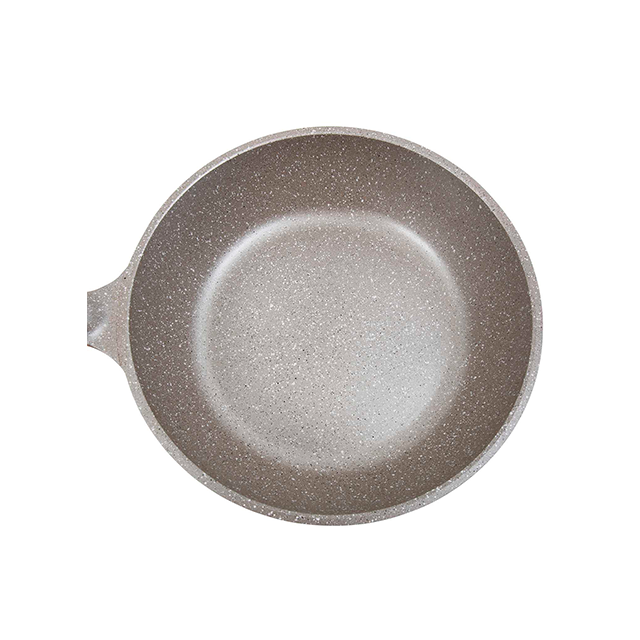
The true effectiveness of a two-coat system lies in the microscopic transition zone where the primer meets the topcoat. The bonding mechanism between these two layers relies on a sophisticated combination of physical and chemical processes. These occur dynamically during application and curing.
The first phase of adhesion is strictly mechanical, relying heavily on surface topography. Before any liquid coating is sprayed, the bare metal substrate undergoes aggressive sandblasting or chemical etching. Factory floors typically use specific grades of aluminum oxide media to achieve the perfect profile. This vital step creates a microscopic landscape of jagged peaks and deep valleys on the metal, exponentially increasing the available surface area.
When the primer is applied, it flows effortlessly into these microscopic crevices. As it undergoes its initial drying phase, it retains a slightly textured micro-surface of its own. Subsequently, when the liquid topcoat is sprayed over the primer, it flows into this newly formed micro-texture. This physical interlocking effect mimics two pieces of a hook-and-loop fastener pressing together. It provides the initial shear strength required to keep the topcoat from sliding off.
While mechanical interlocking provides crucial physical stability, chemical cross-linking is what ultimately makes the two layers inseparable. This molecular bonding occurs exclusively during the high-temperature baking process.
After both layers are applied, the cookware travels into an industrial oven. High-performance formulations typically require a curing window of 380 to 400 degrees Celsius for 10 to 15 minutes. At these extreme heat levels, the resins in the primer and the fluoropolymers in the topcoat melt and become highly reactive. The polymer chains from the topcoat intertwine deeply with the resin matrix of the primer. As the pan eventually cools, these intertwined molecules form permanent covalent bonds. This intricate cross-linking fuses the two separate liquid applications into a single, unified solid film. You cannot peel them apart without physically destroying the pan.
For procurement managers and cookware manufacturers, understanding the underlying science is only half the equation. The commercial and practical benefits dictate purchasing decisions. Implementing this dual-layer technology yields several measurable advantages on the retail shelf and in the kitchen.
One of the most common causes of non-stick failure is blistering. This occurs when moisture, hot cooking oils, or acidic food compounds penetrate a weak topcoat and reach the metal substrate. Once liquids breach this barrier, the heat causes them to rapidly expand into vapor. This pushes the coating upward and creates a blister that eventually ruptures.
A well-bonded two-coat system acts as an impenetrable shield. The intense chemical cross-linking between the layers prevents microscopic permeation. Even if a careless user creates a minor surface scratch with a fork, the robust primer layer remains intact. It protects the metal substrate and stops the scratch from expanding into widespread flaking.
Everyday kitchen use subjects pans to severe mechanical stress. From aggressive metal spatulas to abrasive cleaning sponges and heavy stacking in cabinets, the surface takes a beating. Producing a durable kitchenware non stick coating relies heavily on the double-layer architecture to absorb this daily impact.
Because the primer layer is inherently harder and more rigid than the slick topcoat, it functions much like a shock absorber. When a utensil strikes the surface, the primer disperses the kinetic energy. This prevents the softer topcoat from being gouged all the way down to the bare metal. Standard dual-layer systems easily achieve a pencil hardness of 2H to 3H and routinely pass 50,000-cycle abrasion tests.
Delamination creates microscopic air pockets between the non-stick film and the metal pan. Since air is a remarkably poor conductor of heat, a failing coating leads to uneven temperature distribution. This creates hot spots that burn delicate foods. Because a double layer system ensures complete, gap-free adhesion, it maintains consistent thermal conductivity across the entire cooking surface for the lifespan of the product.
Selecting the correct coating system depends heavily on the intended use-case of the product, the target demographic, and the desired retail price point. Making an informed choice requires an objective look at both performance metrics and long-term brand value.
Feature | Single Layer Coating | Double Layer Coating |
|---|---|---|
Adhesion Mechanism | Mixed resins and polymers compromise bonding strength. | Dedicated primer ensures deep mechanical and chemical anchoring. |
Functional Lifespan | Short-term. Prone to rapid wear under daily use. | Long-term. Highly resistant to blistering and peeling. |
Best Application | Low-end bakeware, promotional items, infrequent use. | Premium stovetop cookware, commercial kitchen equipment. |
Cost-Efficiency | Lower initial manufacturing cost, higher warranty return rate. | Higher initial cost, drastically lower return rate, builds brand loyalty. |
Looking at broader industry trends, there is a pronounced shift in consumer behavior toward sustainability and product longevity. Recent market analyses indicate that modern buyers are increasingly frustrated by the throwaway culture associated with cheap kitchenware. Consumers show a clear willingness to pay a premium for pans that resist premature wear. Forward-thinking manufacturers are recognizing this shift and steadily moving away from disposable single-layer applications. Instead, they are adopting advanced dual-layer architectures. This aligns with the rising demand for extended lifespans, ultimately reducing environmental waste while building stronger brand equity.
From a strict manufacturing standpoint, a double layer system incurs higher upfront costs due to increased material usage and the necessity of a two-step spray process. However, the initial savings of a single layer are quickly erased by high customer return rates and a damaged brand reputation. For serious kitchenware brands aiming to secure repeat business, investing in dual-layer technology drastically reduces warranty claims. It is the most cost-effective choice in the long run.
The immense chemical potential of a two-coat system can only be realized through precise industrial application. Even the most advanced formulations will fail catastrophically if factory application parameters are ignored.
The primer's ability to anchor to the substrate is entirely dependent on surface cleanliness and roughness. In a live factory setting, the bare metal undergoes rigorous alkaline degreasing to strip away all manufacturing oils and organic contaminants. If microscopic oil residues remain, they will vaporize during baking. This will blow holes right through the primer.
Following a thorough rinse, industrial grit-blasting creates a specific surface roughness profile. If the metal is left too smooth, the primer cannot mechanically interlock. Conversely, if it is blasted too roughly, the jagged peaks of the metal may protrude through the coating, causing premature rust.
A frequent technical question on the factory floor is how long operators should wait between applying the primer and the topcoat. Modern industrial cookware manufacturing relies heavily on the wet-on-wet application method to ensure maximum bonding.
After the primer is sprayed, the pan travels through a low-temperature flash-off zone, usually around 80 to 100 degrees Celsius, for just a few minutes. This crucial step evaporates the carrier solvents and water, leaving the primer tacky but absolutely not fully cured. The liquid topcoat is then sprayed directly onto this tacky surface. Applying the topcoat before the primer has fully hardened is essential. It allows the polymers from both layers to mingle freely before entering the final high-temperature bake.
Navigating the industrial coatings market requires separating material science facts from persistent marketing myths. Believing these myths often leads to flawed production decisions.
More is not always better. Coating thickness is carefully measured in Dry Film Thickness. A standard double layer system operates optimally with a primer thickness of 10 to 15 microns and a topcoat of 10 to 15 microns. If applied too thick, often exceeding 45 microns total, the coating becomes overly rigid and brittle. Thermal expansion during everyday cooking will cause an overly thick coating to crack. The actual bond strength between the primer and topcoat matters significantly more than the sheer volume of the application.
Because the topcoat is the visible, glossy surface that repels the morning eggs, novice buyers naturally assume it is the most important element. In reality, the topcoat is functionally useless without a high-quality primer anchoring it down. The long-term durability of a reinforced pan relies heavily on the quality of the primer's adhesion to the metal and its subsequent cross-linking with the topcoat.
For procurement teams, selecting a chemical supplier requires rigorous vetting. You must ensure the promised bonding science translates into a reinforced cookware coating system that performs flawlessly in the real world.
Reputable suppliers should always provide comprehensive technical data sheets demonstrating their coating's performance under standardized stress tests. Key laboratory tests to request include the ASTM D3359 Cross-Hatch Adhesion Test. This directly measures primer-to-metal and primer-to-topcoat bonding by aggressively pulling specialized tape off a cut grid. In addition, look for Salt Spray Corrosion Tests to evaluate moisture resistance, and mechanical Abrasion Resistance tests to simulate years of metal utensil abuse.
Furthermore, there is no universal primer that magically works on everything. A primer engineered to bond with highly porous cast iron will fail to bond effectively with the dense, smooth surface of highly alloyed stainless steel. The best suppliers bypass one-size-fits-all solutions. They provide custom-formulated primers specifically calibrated for the exact metallurgy of your cookware substrate, ensuring perfect mechanical and chemical bonding every single time.
Peeling is rarely an issue with the top surface alone. It almost always indicates a systemic failure in the bonding process. This typically happens due to poor surface preparation, such as inadequate degreasing or insufficient grit-blasting during manufacturing. This prevents the primer from mechanically locking into the metal. Alternatively, extreme overheating by the consumer can break down the chemical cross-linking between the primer and the topcoat, causing the layers to separate and flake.
No, this is not possible in standard cookware manufacturing or home repair. For a double layer system to achieve its signature durability, both the liquid primer and the liquid topcoat must be applied and baked in a highly specific, consecutive sequence. The chemical cross-linking that binds the two layers together only occurs when both layers are cured simultaneously in an industrial oven. Applying a new topcoat over an already cured, hardened primer will result in zero chemical adhesion.
Yes. Modern double layer systems are formulated to meet strict global food safety regulations. As long as the coating is manufactured without restricted substances and undergoes the complete, high-temperature curing process to eliminate all volatile carrier solvents, the final cross-linked film is completely inert and food-safe for daily consumer use.
Yes, it requires a more complex manufacturing footprint. The process involves a two-step spraying protocol, an intermediate temperature-controlled flash-off period, and precise thermal management during the final high-temperature bake. However, the resulting exponential increase in durability and the drastic reduction in consumer warranty claims far outweigh the minor increase in production time and operational costs.
For standard industrial applications, the optimal Dry Film Thickness typically ranges between 20 to 35 microns total. This is usually split evenly, with the primer taking up 10 to 15 microns and the topcoat comprising the remaining 10 to 20 microns. Maintaining this specific thickness range ensures the coating remains flexible enough to handle thermal expansion while remaining thick enough to provide robust abrasion resistance.
Temperature is the critical catalyst for chemical bonding. During the factory curing process, temperatures must reach 380 to 420 degrees Celsius to melt the polymers and force them to cross-link. If the oven temperature is too low, the layers will not fuse, leading to immediate delamination. Conversely, if a consumer repeatedly heats the pan above 260 degrees Celsius in a home kitchen, the intense heat will eventually degrade these chemical bonds, causing the topcoat to lose its non-stick properties and eventually peel.
Ready to upgrade your production line? A double layer coating effectively prevents pan peeling by utilizing a synergistic engineering approach. Through the science of chemical cross-linking, the primer and topcoat fuse together perfectly, creating a highly reliable surface for cooking. Upgrading your product lines ensures fewer returns and higher customer satisfaction. For manufacturers looking to elevate their kitchenware, explore industry-leading formulations and find the perfect match for your substrate at FLD Coating today.

Which Spray Parameters Matter for Sprinkled Non Stick Coating?

How Does Double Layer Coating Improve Primer and Topcoat Bonding?

How Can Frying Pan Coating Improve Coverage Around Curved Edges?

Nano Ceramic Coating Process for Electric Iron Soleplates

How Can Three Layer Coating Handle Thermal Cycling on Stainless Steel?

How Can Rice Cooker Inner Pot Coating Improve Rice Release?

How Can Aluminum Cookware Avoid Distortion During Coating Curing?

How Should Curing Temperature Be Set for Nano Ceramic Coating?

Which Formulation Factors Affect Non Stick Coating Scratch Resistance?

How Should Air Fryer Coating Be Tested for Oil and Cleaning Resistance?

