


Views: 0 Author: Site Editor Publish Time: 2026-10-12 Origin: Site


We have all been there. You just engineered or purchased what seems like the perfect kitchen appliance, and the first batch of honey-glazed wings comes out flawlessly crisp. The food is delicious, but the aftermath at the sink is a complete nightmare. You are left aggressively scrubbing a basket covered in carbonized sugar and polymerized grease. The rapid rise in air fryer popularity has undoubtedly revolutionized home cooking by offering a healthier way to achieve crispy results with minimal oil. However, the true secret behind a high-quality appliance is not just its heating element or airflow design. It is the underlying air fryer coating.
Over time, baked-on grease, repetitive mechanical scrubbing, and harsh alkaline detergents will severely degrade inferior surfaces. This leads to sticky baskets, peeling flakes, and deeply frustrated consumers. To guarantee a long-lasting product, manufacturers must subject these materials to rigorous, standardized quality control. But how exactly should a surface be evaluated on the test bench to ensure it withstands daily culinary abuse? Relying on simple visual inspections is no longer sufficient. This comprehensive technical guide breaks down the essential laboratory testing protocols for oil resistance, cleaning durability, and overall lifespan. By understanding these empirical metrics, engineers and informed buyers can identify a truly reliable product that balances high performance with long-term safety.
Comprehensive Testing is Crucial: A premium surface must undergo both scientific metric evaluations, such as contact angle measurements, and real-world simulations, like burnt food release tests, to guarantee consistent manufacturing quality.
Material Matters: Testing protocols frequently reveal that a ceramic option performs vastly differently under severe thermal stress compared to traditional PTFE coatings, particularly regarding chemical resistance and high-heat stability.
Abrasion and Adhesion: A high-grade finish is defined by its empirical ability to survive thousands of abrasive mechanical scrub cycles and harsh dishwasher chemicals without peeling, blistering, or losing its primary non-stick properties.
Consumer Safety and Satisfaction: Proper adherence to laboratory standards ensures the polymer matrix remains structurally intact at a microscopic level. This prevents potential toxic flaking into food and ensures an effortlessly cleanable surface over a multi-year lifespan.
In the highly competitive landscape of kitchen appliances, consumer satisfaction hinges heavily on post-cooking maintenance. When we explore empirical data from product return metrics, grease buildup, stubborn baked-on food residue, and premature surface peeling emerge as the primary drivers of negative reviews. When a surface fails, the appliance loses its core value proposition. It is no longer convenient.
Rigorous laboratory testing serves as our primary defense against these catastrophic failures in the field. By simulating years of culinary abuse in a highly controlled environment, engineers can identify structural weaknesses in the matrix before mass production begins. Consequently, implementing these strict protocols prevents expensive product recalls, mitigates warranty claims, and ultimately protects your brand reputation in a saturated market.
The distinction between a temporary, low-grade finish and an industrial-grade application lies entirely in its microscopic architecture and chemical bonding. A cheap layer merely sits on top of the metal substrate. It degrades rapidly under thermal expansion. In stark contrast, a rigorously tested surface features high cross-linking density, exceptional substrate adhesion, and robust thermal stability.
Defining this durability requires quantifying the delicate balance between extreme heat resistance and non-stick longevity. A top-tier finish must maintain a remarkably low coefficient of friction even after repeated exposure to thermal shocks and abrasive cleaning tools. As engineers, we define this resilience not by flashy marketing claims, but by the specific number of abrasion cycles and oil immersion hours the surface can withstand before the base metal is exposed.
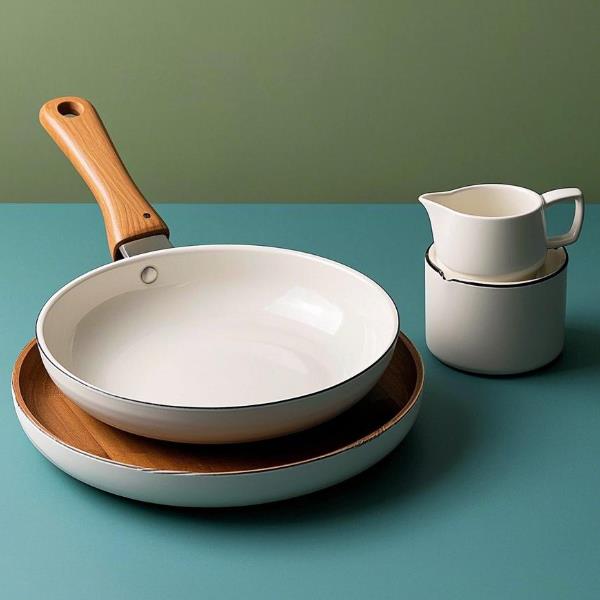
Polytetrafluoroethylene, widely recognized as Teflon, has served as the industry standard for non-stick cookware for decades. In laboratory evaluations, PTFE consistently demonstrates exceptional initial water and oil repellency. Its incredibly low surface energy means that very few substances can adhere to it out of the box.
However, bench testing also exposes its inherent limitations regarding long-term wear and thermal degradation. When subjected to continuous temperatures exceeding 500 degrees Fahrenheit, traditional PTFE begins to break down. Furthermore, mechanical abrasion tests frequently show that it is highly susceptible to scratching from metal utensils or coarse scrubbing pads, which accelerates the loss of its non-stick capabilities.
Due to mounting environmental concerns and the consumer demand for higher heat tolerance, manufacturers are increasingly shifting toward sol-gel ceramic alternatives. A ceramic coating for air fryer baskets is typically derived from silica and applied through a specialized sol-gel process, creating a dense, inorganic network.
Laboratory evaluations highlight the unique high-heat benefits of these nano-ceramic layers. Premium formulations often feature a 9H pencil hardness and a standard film thickness of 30 to 45 micrometers. Unlike legacy polymers, these ceramic surfaces can withstand temperatures well over 800 degrees Fahrenheit without structural degradation. Additionally, these finishes are inherently free of PFAS, PFOA, and heavy metals. Testing proves that while their initial slickness might slightly trail premium PTFE, their extreme hardness and resistance to thermal blistering make them an exceptionally safe choice for modern appliances.
Beyond standard options, the appliance market is currently seeing the introduction of silicone resins and advanced hybrid blends that attempt to bridge the gap between PTFE slickness and ceramic hardness. Silicone offers excellent flexibility and safe food-contact properties, though it often exhibits lower abrasion resistance in standardized scrub tests. Hybrid formulas require highly specialized testing parameters to evaluate how the distinct materials behave together under thermal expansion.
Before diving deeper into specific testing protocols, we must address the massive shift currently disrupting the appliance manufacturing sector. Global regulatory bodies are aggressively phasing out per- and polyfluoroalkyl substances, commonly known as PFAS. With sweeping legislation restricting these legacy chemicals across North America and the European Union, brands can no longer rely on traditional fluoropolymers without facing severe compliance risks.
This regulatory trend has forced a complete paradigm shift in how R&D departments test and validate new materials. Engineers are now tasked with matching the legendary oleophobicity of legacy non-sticks using entirely inorganic, eco-friendly sol-gel ceramics. Consequently, laboratory testing has become more rigorous than ever, focusing heavily on chemical extraction tests to prove absolute zero leaching of restricted substances under extreme heat.
To scientifically quantify oil resistance, testing facilities rely heavily on contact angle measurement. Using an optical precision instrument called a goniometer, technicians place a microscopic droplet of testing liquid, often hexadecane, directly onto the coated substrate.
The science of contact angles dictates that the higher the angle between the droplet edge and the surface, the better the oil resistance. If the oil beads up into a tight, distinct sphere with a contact angle greater than 65 degrees, the surface is considered highly oleophobic. Conversely, if the liquid spreads flat and pools, the surface will easily absorb grease, inevitably leading to severe staining during normal cooking operations.
Standardized oil immersion tests are specifically designed to simulate months of intensive cooking within a highly compressed timeframe. Coated metal panels are completely submerged in cooking oils, such as canola or soybean oil, and maintained at boiling temperatures for extended periods ranging from 72 to 120 hours.
The primary objective here is to observe how the matrix reacts when cooking oils polymerize. At around 400 degrees Fahrenheit, liquid fats undergo a chemical transformation, turning into sticky, baked-on resins. Technicians evaluate whether this polymerized grease bonds chemically to the microscopic pores. A passing grade requires that the polymerized oil can be removed with minimal mechanical force, without leaving permanent carbonized stains or causing delamination.
Daily cleaning is unequivocally the primary cause of field failure. To ensure long-term resilience, surfaces must endure the Sponge and Scrub Abrasion Test, often modeled after ISO 11998 standards. This test utilizes automated mechanical arms equipped with standardized abrasive pads.
The robotic arm applies a consistent 1.5-kilogram downward load and performs reciprocating linear scrubbing motions across the surface. Laboratories meticulously measure at exactly what cycle count a durable appliance non stick coating begins to exhibit visible scratching, loss of gloss, or exposure of the bare metal. A premium application is expected to survive upwards of 10,000 abrasive cycles without compromising its structural integrity.
Adhesion to the underlying metal substrate is just as vital as top-layer hardness. The Cross-Hatch Adhesion Test under ASTM D3359 standards serves as the global benchmark for evaluating this critical bond. Using a specialized cutting tool, technicians carve a precise lattice grid directly through the finish down to the bare metal.
Next, pressure-sensitive standardized tape is firmly applied over the grid and rapidly pulled off at a 180-degree angle. The grid is then inspected under high magnification. If the material pulls away or flakes at the intersections, it indicates poor adhesion. A top-tier 5B rating means zero flaking occurred, proving the matrix will not peel even after enduring intense cleaning stress.
To help engineers and procurement teams visualize the differences, we have compiled the standard laboratory test results for the three primary material categories used in modern air fryers.
Material Type | Pencil Hardness | Max Continuous Heat | Abrasion Resistance Cycles | PFAS-Free Compliance |
|---|---|---|---|---|
Traditional PTFE | 2H - 3H | 500°F / 260°C | 3,000 - 5,000 | No |
Sol-Gel Nano Ceramic | 8H - 9H | 800°F / 427°C | 10,000+ | Yes |
Silicone Hybrid | 4H - 5H | 600°F / 315°C | 5,000 - 7,000 | Varies by formula |
While chemical and mechanical tests provide excellent baseline metrics, they must ultimately be validated through real-world food simulation. Laboratories frequently utilize the burnt sugar and chicken fat protocol because these specific ingredients represent the absolute worst-case scenarios for culinary adhesion.
Marinades containing high sugar content, like honey or thick barbecue sauce, undergo rapid caramelization and the Maillard reaction. When exposed to circulating superheated air, they eventually turn into a hard, carbonized glue. Simultaneously, chicken skin releases complex lipids that can easily penetrate the micro-pores of inferior surfaces. Testing with these highly adhesive foods ensures the finish can handle the exact chemical complexities of a consumer's daily diet.
After baking these sticky food simulations at maximum temperatures, the release properties are systematically evaluated. Technicians do not rely on subjective observation. Instead, they utilize a standardized scoring system.
The surface is scored on a strict scale ranging from Level 5, which means food slides right off without assistance, to Level 1, which requires heavy scraping and soaking. For a product to pass stringent quality control, it must consistently achieve high scores, demonstrating that even carbonized sugar and polymerized fats can be released with a simple wipe of a damp microfiber cloth.
Procurement teams in appliance manufacturing face the constant challenge of balancing production costs with rigorous test performance. The cheapest options on the market frequently fail the cross-hatch adhesion and boiling oil immersion tests. While they may save a few cents per unit upfront, they cost significantly more in the long run due to skyrocketing product returns and irreversible brand damage.
If your appliance is designed to hit 400 degrees Fahrenheit regularly, you should spec a ceramic formulation. Look for materials that seamlessly pass FDA extraction tests, proving no harmful substances leach into food under high heat. In Europe, the LFGB standard is even more stringent, testing for heavy metal migration and sensory changes to the food itself. Prioritize comprehensive test verifications proving the formula is entirely free of legacy chemicals.
The lifespan, safety, and ultimate user satisfaction of an air fryer rely almost entirely on the quality of its basket surface. By subjecting these finishes to stringent oil immersion, mechanical abrasion, and real-world food simulation tests, manufacturers can confidently guarantee a truly resilient product. Understanding these deep-level testing methodologies empowers B2B buyers and engineers to partner with the right suppliers.
Do not let a sub-par finish ruin a great appliance design. Evaluate your specific thermal and mechanical requirements carefully. To explore industrial-grade, rigorously tested formulations that meet global safety standards, visit FLD Coating to find the exact high-performance solution tailored for your next manufacturing project.
In professional laboratory testing, a high-quality oleophobic surface should demonstrate a hexadecane contact angle of at least 65 degrees, and a water contact angle exceeding 105 degrees. These metrics ensure that cooking oils bead up rather than spreading out and penetrating the microscopic pores of the material.
Film thickness plays a critical role in thermal stability and wear resistance. For advanced nano-ceramics, engineers typically aim for a dry film thickness between 30 and 45 micrometers. If the layer is too thin, it will fail abrasion tests prematurely. If it is applied too thickly, it becomes susceptible to thermal shock and cracking during rapid temperature changes.
With proper care, a rigorously tested appliance finish should last between two to five years. The exact lifespan depends heavily on the frequency of use, the types of utensils used, and daily cleaning habits. Surfaces that have passed extensive 10,000-cycle abrasion testing will naturally fall on the longer end of this spectrum.
Ceramic options are naturally highly resistant to heat and offer excellent initial oil and water repellency. While traditional PTFE may have a slight edge in long-term frictionless slickness, ceramic is widely preferred for being completely free of PFAS. Furthermore, ceramic handles high-heat oil polymerization exceptionally well without degrading or releasing toxic fumes into the kitchen.
Laboratories utilize specialized chemical extraction tests, liquid chromatography, and mass spectrometry to guarantee consumer safety. They expose the material to aggressive food simulants, like acetic acid or high-proof alcohols, at extreme temperatures for prolonged hours. The resulting liquid is then analyzed to ensure no harmful chemicals or heavy metals leach from the matrix, ensuring compliance with strict global regulations.
Even if a product passes dishwasher simulation tests in a laboratory setting, frequent dishwasher use is strongly discouraged. The harsh alkaline detergents, prolonged moisture exposure, and severe thermal heat of a consumer dishwasher will inevitably degrade any non-stick surface much faster than gentle hand washing. Cleaning with warm water, mild dish soap, and a soft non-abrasive sponge is always the best engineering practice to maximize the lifespan of the appliance.

How Can Aluminum Cookware Avoid Distortion During Coating Curing?

How Should Curing Temperature Be Set for Nano Ceramic Coating?

Which Formulation Factors Affect Non Stick Coating Scratch Resistance?

How Should Air Fryer Coating Be Tested for Oil and Cleaning Resistance?

How Can Hair Straightener Coating Keep Heating Plates Smooth?

How Can Water Based Fluorine-Free Coating Fit a Mass Spray Line?

How Can Three Layer Coating Stay Consistent in Continuous Production?

How Can Frying Pan Coating Balance Food Release and Wear Resistance?
Water Based Fluorine-Free Coating for Rice Cooker Inner Pots

How Non-Stick Coatings Are Manufactured Step by Step

