


Views: 0 Author: Site Editor Publish Time: 2026-01-09 Origin: Site


Non-stick cookware has revolutionized cooking by making meal preparation quicker and easier. The unique non-stick properties of these cookware surfaces have made them indispensable in kitchens around the world. One key question many consumers ask is, “How is non-stick coating made?” This article delves into the manufacturing process of non-stick coatings, focusing on the various materials, techniques, and steps involved in creating these coatings. By understanding the intricate process behind non-stick coatings, consumers can make informed decisions about their cookware choices and learn about the durability, safety, and performance of non-stick surfaces.
A non-stick coating refers to a layer applied to cookware surfaces to prevent food from sticking during cooking. These coatings significantly enhance the cooking experience by requiring less oil, facilitating easier food release, and making cleanup much simpler. Non-stick cookware is ideal for cooking delicate foods, like fish or eggs, that tend to stick to regular surfaces.
Non-stick coatings also help in reducing the consumption of cooking oils and fats, contributing to healthier meals. This is particularly beneficial for individuals who are looking to cut down on calorie intake or those following a healthier diet plan.
There are several types of non-stick coatings used in cookware, each with its unique composition and benefits. The most common types include:
Type of Coating | Key Material | Benefits | Drawbacks |
PTFE (Teflon) | Polytetrafluoroethylene (PTFE) | Excellent non-stick properties, heat resistance | Can degrade at high temperatures, concerns about PFOA |
Ceramic | Silica-based materials | Eco-friendly, free from PFOA, non-toxic | Less durable, can degrade over time |
Titanium | Titanium particles + ceramic | Scratch-resistant, heat-resistant, durable | Expensive, can be prone to chipping if dropped |
Silicone | Silicone rubber | Flexible, heat-resistant, non-toxic | Less effective non-stick properties compared to others |
Enamel | Glass or ceramic-based | Durable, non-stick, easy to clean | Does not perform as well as PTFE in non-stick capability |
Each type of coating has distinct advantages and drawbacks, and the manufacturing process varies for each material.
PTFE, commonly known by the brand name Teflon, is the most recognized non-stick coating used in cookware. This material has remarkable non-stick properties, which allow food to slide off the surface with ease. It is made through a polymerization process that creates a smooth, water-repellent surface.
PTFE is a synthetic polymer, made from carbon and fluorine atoms, and is highly resistant to heat and corrosion. Despite its excellent non-stick properties, PTFE coatings can be prone to damage at extremely high temperatures, which can cause the coating to break down and release harmful fumes.
Ceramic non-stick coatings are made from silica-based materials and are an increasingly popular alternative to PTFE. These coatings are marketed as eco-friendly and free from PFOA and PTFE, making them attractive to consumers who are concerned about chemicals in cookware. Ceramic coatings are typically produced by applying a sol-gel process to the cookware, which forms a thin ceramic layer that bonds with the surface.
Ceramic coatings are known for their non-toxic nature and the ability to provide a natural non-stick surface. However, they are generally less durable than PTFE-based coatings and may wear out more quickly over time.
Titanium non-stick coatings are made by blending titanium particles with a ceramic base. The titanium enhances the durability, scratch resistance, and heat tolerance of the non-stick surface. These coatings are often marketed as more robust than PTFE coatings, offering superior scratch resistance and heat resistance.
Titanium coatings are more environmentally friendly than PTFE-based coatings, and they do not release harmful chemicals when overheated. However, they are more expensive than traditional non-stick cookware.
Silicone is a flexible, rubber-like material used in bakeware and other kitchen tools. While it does offer some non-stick properties, it is not as effective as PTFE or ceramic coatings for cooking. Silicone is heat-resistant, making it an excellent option for items like baking mats, muffin trays, and oven mitts. However, its non-stick capabilities are not as reliable when compared to other options.
Enamel coatings are made from a type of glass or ceramic material that is fused to the cookware. Enamel-coated cookware offers a smooth, non-stick surface that is both scratch-resistant and easy to clean. These coatings are commonly found in cast-iron cookware and are popular for their durability and classic aesthetic. Enamel coatings do not have the same non-stick properties as PTFE-based coatings, but they do provide some level of food release.
The process of creating non-stick cookware begins with the surface preparation of the cookware. The cookware must be thoroughly cleaned and de-oiled to ensure that the non-stick coating adheres properly. The cookware is typically cleaned using a combination of abrasive materials and chemical agents that remove any impurities or oil from the surface.
Once cleaned, the cookware is subjected to a surface roughening process, which helps the non-stick coating bond more securely to the base material. This rough surface allows the coating to grip the cookware more effectively, ensuring that it stays in place during cooking.
There are various methods for applying non-stick coatings, depending on the type of coating used and the cookware’s design. The most common methods include:
Coating Method | Description | Best For |
Spray Coating | Fine mist of coating material sprayed onto the cookware | Small and medium cookware items |
Dip Coating | Cookware is dipped into a vat of non-stick material | Larger cookware items |
Powder Coating | Powdered coating applied and baked to fuse the material | Ceramic and titanium cookware |
Electrostatic Coating | Coating material charged and applied uniformly | Large-scale industrial production |
The coating is typically applied in multiple layers to enhance durability, with each layer being cured before the next is applied. The thickness of the coating is carefully controlled to ensure maximum non-stick performance.
After the non-stick coating is applied, the cookware is cured by heating it in an oven. This process is essential to ensure that the coating bonds properly to the cookware. The curing process can vary depending on the type of coating used, but it generally involves heating the cookware to high temperatures (typically around 400°F to 600°F) for a specific period of time.
The heat causes the coating to harden and adhere to the cookware’s surface, creating a smooth and durable non-stick layer. For PTFE-based coatings like Teflon, the curing process also removes any residual solvents, ensuring that the cookware is safe for cooking.
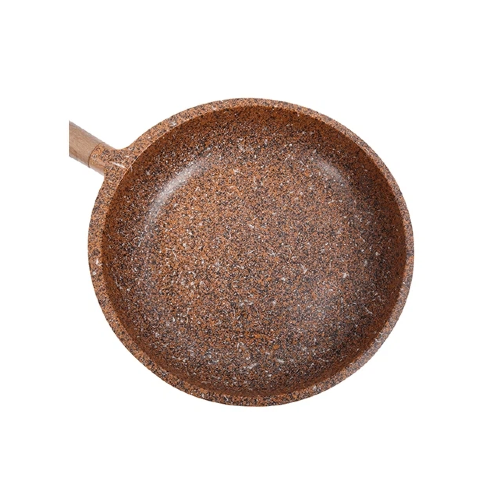
Spray coating is the most common technique used for applying PTFE-based non-stick coatings like Teflon. The cookware is sprayed with a fine mist of the coating material, which evenly covers the surface. This method is ideal for mass production and is widely used in manufacturing cookware items such as frying pans, woks, and baking trays.
Dip coating is typically used for larger or more complex cookware, such as roasting pans or griddles. In this method, the cookware is dipped into a vat of non-stick coating material, which covers the entire surface. The cookware is then removed and allowed to dry before undergoing the curing process. Dip coating ensures an even application of the coating material and is often used for ceramic coatings and titanium-based coatings.
Powder coating is an effective method for applying ceramic and titanium non-stick coatings. This technique involves applying a dry powder coating material to the cookware, which is then heated to fuse the powder and form a smooth, hard coating. Powder coating provides excellent durability and resistance to wear and tear, making it suitable for cookware exposed to high temperatures.
Electrostatic coating is a process where the coating material is given an electrical charge, which attracts it to the cookware's surface. This method ensures that the coating is applied evenly, with no gaps or streaks. Electrostatic coating is typically used for industrial applications, where large batches of cookware are being produced.
Once the non-stick coating has been applied and cured, the cookware undergoes durability testing to ensure that it will perform effectively over time. This testing often includes abrasion tests, scratch tests, and heat resistance tests to simulate the conditions the cookware will face during normal use.
Test Type | Purpose | How it Works |
Scratch Resistance | Testing the cookware's ability to withstand scratches | Cookware is subjected to mechanical stress and tested for scratches |
Abrasion Resistance | Ensuring that the coating won’t wear off quickly | Cookware is rubbed with abrasive materials to check for wear |
Heat Resistance | Verifying that the non-stick coating can withstand high temperatures | Cookware is heated to high temperatures to test for degradation |
Non-stick coatings must adhere to strict safety standards to ensure they are free from harmful chemicals like PFOA (Perfluorooctanoic acid), which has been associated with health risks. Modern non-stick coatings are typically PFOA-free, and manufacturers follow stringent guidelines to ensure that the coatings meet FDA and LFGB safety requirements.
As consumers become more environmentally conscious, non-stick cookware manufacturers are turning to eco-friendly and sustainable practices. Water-based coatings and non-toxic materials are becoming more prevalent, and companies are working to reduce harmful emissions during production.
The lifespan of a non-stick coating depends on several factors, including:
Factor | Impact on Durability | Tips to Improve Lifespan |
Type of Coating | PTFE coatings last longer than ceramic coatings | Choose higher-quality cookware and care for it properly |
Cooking Habits | Cooking at high temperatures can degrade coatings | Use medium heat and avoid overheating |
Care and Maintenance | Improper cleaning or using metal utensils can damage coatings | Clean with non-abrasive sponges and use silicone or wooden utensils |
Creating a non-stick coating requires a meticulous and detailed process to ensure that cookware is not only functional but also long-lasting and safe. The steps involved—surface preparation, coating application, and curing—are critical to producing a final product that meets high standards for performance, safety, and durability.
Whether you are choosing PTFE (Teflon), ceramic, or titanium coatings, each material's manufacturing process plays a significant role in its effectiveness and longevity. Understanding how these coatings are made helps consumers select the best cookware for their needs, ensuring they get the most out of their investment.
At Zhongshan Flead Coatings Co., Ltd., we specialize in providing high-quality non-stick coatings tailored to meet the demands of modern kitchens. Our advanced coatings offer exceptional durability, heat resistance, and non-toxic properties, ensuring safe and efficient cooking. We invite you to reach out to us for more information on how our innovative coating solutions can enhance your cooking experience and help you select the right cookware for your needs.
The primary ingredient in non-stick coatings is PTFE (Polytetrafluoroethylene), but alternatives such as ceramic and titanium are also used for coating cookware.
Non-stick coatings are typically applied through spray, dip-coating, powder-coating, or electrostatic coating methods, depending on the type of cookware and the desired thickness of the coating.
To maintain your non-stick cookware, avoid using metal utensils, cook at moderate temperatures, and clean the cookware with a soft sponge. Always follow the manufacturer’s care instructions.
Modern non-stick coatings are typically PFOA-free and safe for use, as long as they are used at moderate temperatures. However, overheating can cause damage to the coating.
Non-stick coatings wear out due to factors such as overheating, scratches, abrasion, and the use of metal utensils. Regular wear and tear, especially with ceramic coatings, can also reduce the non-stick effect.

How Can Hair Straightener Coating Keep Heating Plates Smooth?

How Can Water Based Fluorine-Free Coating Fit a Mass Spray Line?

How Can Three Layer Coating Stay Consistent in Continuous Production?

How Can Frying Pan Coating Balance Food Release and Wear Resistance?
Water Based Fluorine-Free Coating for Rice Cooker Inner Pots

How Non-Stick Coatings Are Manufactured Step by Step

How Nano Ceramic Coating Improves Cookware Performance

How Long Does Non-Stick Coating Last?

Single Layer vs Double Layer Coating: Key Differences

Applications of Non-Stick Coating in Kitchen Appliances

