


Views: 0 Author: Site Editor Publish Time: 2026-07-29 Origin: Site


Regulatory shifts and consumer preferences are moving away from traditional per- and polyfluoroalkyl substances (PFAS) in cookware manufacturing. This movement creates a need for high-performance alternatives that meet safety standards without compromising usability. Manufacturers face a historical compromise: achieving long-lasting non-stick properties often meant sacrificing thermal durability, surface hardness, or environmental compliance. Traditional fluoropolymers provided excellent release properties but carried regulatory scrutiny. Today, Nano Ceramic Coating technology stands as the industry standard for bridging the gap between non-toxic compliance and premium cookware performance. By utilizing advanced sol-gel chemistry and nanoparticle integration, this solution offers a robust framework for evaluating technical viability, manufacturing scalability, and implementation risks.
The foundation of modern ceramic coatings relies on the sol-gel process. This chemical transition begins with a liquid solution, known as the sol, which gradually evolves into a solid, continuous network, or gel. During application and curing, the solvent evaporates, and the precursors undergo hydrolysis and polycondensation. Silicon dioxide (silica) forms the rigid backbone of this coating matrix. Unlike legacy non-stick systems, this process completely eliminates the need for fluoropolymers. The resulting silica network provides a stable, heat-resistant barrier that adheres mechanically to properly prepared metal substrates. Factory floor implementation requires strict climate control, as ambient humidity directly impacts the hydrolysis rate and the final structural integrity of the gel network.
The term nano ceramic refers specifically to the integration of nanoparticles—typically titanium dioxide or silicon dioxide measuring under 100 nanometers—into the sol-gel matrix. These microscopic particles play a structural role by filling the microscopic voids and micro-fissures inherent in standard ceramic structures. This high-density molecular arrangement prevents liquid, oil, and food moisture from penetrating the coating. By sealing these microscopic vulnerabilities, the nanoparticles establish a robust baseline for non-stick properties while simultaneously reinforcing the structural integrity of the entire layer. In practical manufacturing, dispersing these nanoparticles evenly requires high-shear mixing equipment to prevent agglomeration before the spray application.
Surface energy dynamics dictate how liquids and solids interact with the cookware. Nano ceramic surfaces are engineered to possess exceptionally low surface energy. This characteristic creates a high water contact angle, typically exceeding 100 degrees. When water or oil contacts the surface, it beads up rather than spreading out and wetting the pan. This hydrophobic and oleophobic behavior facilitates the physical release of food particles during cooking. The low surface energy ensures that proteins and sugars do not form strong chemical bonds with the pan, allowing for effortless cleaning and improved cooking efficiency. Engineers often measure these contact angles on the production line using specialized goniometers to verify batch consistency.
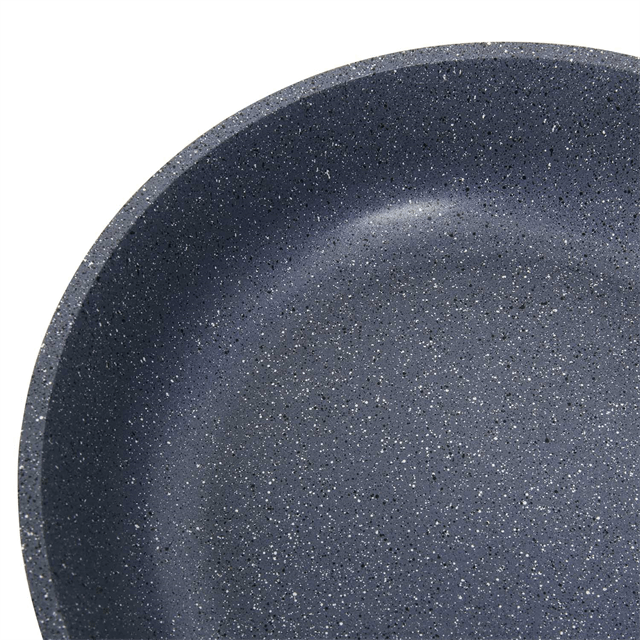
Thermal transfer rates are a primary indicator of cookware quality. Nano ceramic structures exhibit superior thermal conductivity compared to traditional polymer-based coatings. The dense silica and nanoparticle matrix transfers heat rapidly from the metal substrate directly to the cooking surface. This efficient energy transfer minimizes localized hot spots, ensuring even cooking across the entire pan. Consequently, the coating reduces the total energy required to reach and maintain optimal cooking temperatures, offering a distinct advantage in both domestic and commercial kitchens. Field tests show that aluminum pans coated with this technology reach target searing temperatures up to 15% faster than their PTFE-coated counterparts.
Durability in the kitchen requires extreme surface hardness. On the pencil hardness scale, high-quality nano ceramic surfaces frequently achieve ratings between 9H and 10H. This exceptional scratch resistance correlates directly with the density of the integrated nanoparticles. The glass-like rigidity of the cured silica network withstands abrasion from metal utensils, abrasive cleaning pads, and harsh spatulas far better than softer fluoropolymer alternatives. This resistance to physical wear dramatically extends the functional lifecycle of the pan. Manufacturers verify this by subjecting sample batches to rigorous cross-hatch adhesion and gouge hardness testing before approving a production run.
Kitchen environments routinely subject pans to rapid temperature differentials, such as deglazing a searing hot pan with cold stock. This thermal shock tests the elasticity and stability of the coating matrix. A major engineering challenge is managing the coefficient of thermal expansion (CTE) mismatch between the metal substrate and the rigid ceramic layer. Modern sol-gel formulations incorporate specific additives that grant the ceramic matrix microscopic flexibility. This engineered elasticity prevents crazing, cracking, or delamination when the underlying metal expands and contracts rapidly. Formulators adjust the silica-to-additive ratio based on whether the target substrate is highly expansive aluminum or more stable carbon steel.
Validating these performance claims requires rigorous, industry-standard testing methods. The Taber Abrasion Test (ASTM D4060) quantifies wear resistance by rotating abrasive wheels against the coated surface under specific loads. The British Standard (BS EN 12983-1) evaluates overall cookware safety and performance under mechanical stress. Additionally, LGA non-stick testing protocols provide quantitative benchmarks for food release. These include shaking tests, milk-burning tests, and egg-release tests, which objectively measure how many cooking cycles the surface can endure before the non-stick properties begin to degrade. Production facilities maintain dedicated quality control labs to run these protocols continuously.
Regulatory frameworks globally are tightening restrictions on fluorinated chemicals. EPA guidelines in the United States and European Chemicals Agency (ECHA) restrictions are actively phasing out PFAS and PFOA compounds due to their persistence in the environment and potential health risks. Nano ceramic formulations provide a legally compliant, future-proof pathway for global distribution. By utilizing purely inorganic silicon and titanium precursors, manufacturers bypass these regulatory hurdles entirely, ensuring uninterrupted market access and consumer trust. Transitioning a factory line to these materials requires auditing the entire supply chain to guarantee zero cross-contamination from legacy fluoropolymer production.
Compliance pathways for global markets demand strict adherence to food contact safety standards. Formulations must pass FDA CFR 21 regulations in the US and the stringent LFGB standards in Germany and the broader European market. Furthermore, compliance with REACH and RoHS directives ensures the absence of hazardous substances. Heavy metal migration testing is a critical component of this certification process. Laboratories verify that the coating remains entirely inert, ensuring that no lead, cadmium, or other toxic elements leach into food, even under extreme high-heat cooking environments. Documentation of these tests must be maintained for every master batch of sol-gel received.
Evaluating the environmental impact of manufacturing reveals why this technology is classified as a true eco coating. The sol-gel curing process significantly reduces toxic off-gassing compared to the high-temperature baking required for PTFE application. Furthermore, the end-of-life recyclability of ceramic-coated substrates presents a major advantage. Because the coating is essentially a microscopic layer of glass (silica), ceramic-coated aluminum or steel can often be recycled more efficiently than PTFE-coated equivalents, which require complex processing to safely incinerate or remove the fluoropolymers. Factory emissions scrubbers also require less maintenance when processing sol-gel compared to fluorinated compounds.
Standard ceramic coatings often suffer from higher porosity and lower molecular density. Without the inclusion of nanoparticles, standard sol-gel ceramics develop micro-fissures over time, leading to faster degradation of the non-stick surface and increased staining. Nano ceramics fill these microscopic gaps, resulting in a significantly denser matrix. While the initial application cost of nano formulations may be slightly higher, the cost-to-lifespan ratio is vastly superior, as the cookware maintains its release properties and structural integrity much longer. Production managers note that the spray equipment requires more frequent nozzle cleaning when handling the denser nano formulations.
Hard-anodized aluminum relies on an electrochemical surface treatment that thickens the natural oxide layer of the metal, providing excellent durability but poor non-stick properties. Nano ceramic, conversely, is an applied coating. The most robust manufacturing approach is a hybrid system: applying a nano ceramic layer over a hard-anodized substrate. This combination delivers the ultimate durability—the anodized aluminum prevents denting and warping, while the ceramic topcoat provides the necessary hydrophobic release and chemical resistance. This dual-process manufacturing requires precise coordination between the anodizing baths and the spray coating lines.
The primary contrast between these technologies lies in heat tolerance. Nano ceramic remains structurally stable at temperatures up to 450°C (842°F), whereas PTFE begins to degrade and release toxic fumes at approximately 260°C (500°F). Manufacturers must weigh a specific trade-off: PTFE offers superior initial slickness and a slightly longer-lasting non-stick effect under low heat. However, nano ceramic provides vastly superior high-heat safety, extreme surface hardness, and complete freedom from fluoropolymer regulations. Factory curing ovens for ceramic operate at lower peak temperatures but require longer dwell times than PTFE lines.
Seasoned cast iron and carbon steel require continuous maintenance, including careful washing, immediate drying, and regular oil re-seasoning to maintain their polymerized non-stick layers. Ceramic coatings offer a maintenance-free alternative that appeals to modern consumers. Furthermore, seasoned surfaces degrade rapidly when exposed to acid-heavy foods like tomatoes or vinegar. Nano ceramics remain completely inert and unaffected by acidic cooking environments, preserving both the pan's surface and the flavor profile of the dish. Applying ceramic to cast iron requires specialized primer layers to bridge the rough, porous iron surface.
| Coating Type | Heat Tolerance | Scratch Resistance | Maintenance Required | PFAS-Free |
|---|---|---|---|---|
| Nano Ceramic | Up to 450°C (842°F) | Excellent (9H-10H) | Low | Yes |
| PTFE (Traditional) | Up to 260°C (500°F) | Moderate | Low | No |
| Standard Ceramic | Up to 400°C (752°F) | Good | Low | Yes |
| Seasoned Cast Iron | Very High | High | High (Re-seasoning) | Yes |
The raw material and application costs of advanced sol-gel formulations are generally higher than basic PTFE sprays. High-grade silicon precursors and precisely engineered nanoparticles require specialized handling. However, the clean cooking and non-toxic value propositions strongly resonate with today's health-conscious consumers. This allows brands to justify higher retail price points. By positioning the cookware in the premium or eco-friendly market segments, manufacturers offset the increased cost-per-unit and achieve a stronger overall return on investment. Procurement teams must secure long-term contracts for high-purity silica to stabilize these unit costs.
Energy requirements for curing sol-gel coatings differ significantly from traditional polymers. Nano ceramic typically cures at lower temperatures than PTFE, which requires intense heat to sinter the fluoropolymer particles. However, the sol-gel process demands highly precise atmospheric controls, including specific humidity levels, to ensure proper cross-linking of the silica network. When optimized, these lower curing temperatures translate to substantial energy savings and higher throughput efficiency in large-scale production facilities, reducing the overall carbon footprint of the manufacturing process. Facility engineers must install advanced HVAC systems to maintain the exact humidity required in the curing tunnels.
The primary cause of coating failure is not the sol-gel itself, but improper substrate preparation. Inadequate sandblasting, poor degreasing, or incorrect surface profiling prevents the ceramic matrix from establishing a mechanical bond with the metal. To mitigate adhesion failures, facilities must adhere to strict surface roughness (Ra) metrics. A precise, uniform anchor profile is absolutely required for optimal mechanical bonding. Regular audits of the grit-blasting equipment and automated degreasing lines are mandatory to maintain these parameters. The standard preparation sequence includes:
Applying the sol-gel requires exacting precision. If the coating is applied too thick, the rigid silica network becomes brittle, leading to cracking and delamination during thermal cycling. Conversely, applying it too thin results in poor non-stick performance and premature wear. Facilities must implement automated robotic spraying systems to maintain micron-level consistency across complex pan geometries. Integrating optical inspection protocols and dry film thickness (DFT) gauges directly into the production line ensures that every unit meets strict dimensional tolerances. Hand-spraying is entirely inadequate for maintaining the tight tolerances required by nano formulations.
The silica-based ceramic network is inherently vulnerable to high-alkaline environments. Standard dishwasher detergents utilize harsh chemicals that can slowly etch the glass-like surface, dulling the finish and degrading the non-stick release over time. To validate dishwasher safe product claims, manufacturers must implement engineering modifications. Applying specialized, chemically resistant top-coat sealers over the primary nano ceramic layer significantly enhances resistance to alkaline degradation, though hand washing remains the best practice for maximum longevity. Accelerated alkaline immersion testing is used in the lab to simulate years of dishwasher exposure.
The performance of the final product relies entirely on the purity of the chemical inputs. There is inherent volatility in sourcing high-grade silicon precursors and precisely sized nanoparticles. Inconsistent raw materials lead to batch-to-batch variations in curing times and surface hardness. Manufacturers must vet chemical suppliers rigorously. Strategies include demanding comprehensive certificates of analysis for every shipment, partnering exclusively with ISO-certified chemical providers, and maintaining secondary approved suppliers to prevent production bottlenecks. Incoming quality control must test the viscosity and solid content of every drum before it reaches the spray line.
Nano ceramic coating represents the optimal choice for manufacturers seeking to balance high-heat performance, extreme surface hardness, and strict environmental compliance. By eliminating toxic fluoropolymers and leveraging advanced sol-gel chemistry, this technology delivers a premium, durable cooking surface that aligns with modern regulatory demands and consumer expectations.
A: The primary difference is the inclusion of nanoparticles, such as titanium dioxide or silicon dioxide. These microscopic particles fill the inherent pores and micro-fissures found in standard sol-gel ceramics. This creates a significantly denser, smoother, and more durable matrix that resists staining and degradation much better than standard ceramic formulations.
A: The combination of silica and integrated nanoparticles cures into a highly rigid, glass-like structure. This dense molecular network scores significantly higher on the pencil hardness scale (often 9H to 10H) than traditional polymers, providing superior defense against metal utensils and abrasive cleaning pads.
A: Yes. It is manufactured entirely without PFAS, PFOA, or PTFE. Because it relies on inorganic silicon and titanium, it releases no toxic fumes during high-heat cooking applications or during the factory curing process, making it environmentally safe and fully compliant with global regulations.
A: Nano ceramic can be applied to a variety of metals, including aluminum, stainless steel, and cast iron. However, regardless of the metal chosen, proper mechanical profiling—specifically precise sandblasting—is absolutely required to create the necessary surface roughness for the coating to bond mechanically.
A: While modern formulations utilize specialized top-coats engineered to withstand standard wash cycles, hand washing is technically recommended. High-alkaline dishwasher detergents can slowly etch the silica matrix over time, which may eventually degrade the non-stick properties and dull the surface finish.
A: High-quality nano ceramics are chemically engineered with microscopic elasticity to match the coefficient of thermal expansion of the underlying metal substrate. Despite this, rapid quenching—such as submerging a searing hot pan in cold water—should be avoided to prevent potential micro-fracturing or delamination of the ceramic layer over time.

How Can Hair Straightener Coating Keep Heating Plates Smooth?

How Can Water Based Fluorine-Free Coating Fit a Mass Spray Line?

How Can Three Layer Coating Stay Consistent in Continuous Production?

How Can Frying Pan Coating Balance Food Release and Wear Resistance?
Water Based Fluorine-Free Coating for Rice Cooker Inner Pots

How Non-Stick Coatings Are Manufactured Step by Step

How Nano Ceramic Coating Improves Cookware Performance

How Long Does Non-Stick Coating Last?

Single Layer vs Double Layer Coating: Key Differences

Applications of Non-Stick Coating in Kitchen Appliances

