


Views: 0 Author: Site Editor Publish Time: 2026-04-30 Origin: Site


Many cookware buyers see “ceramic non stick coating” on frying pans, bakeware, air fryer baskets, and kitchen appliance plates, but not everyone understands what it really means. For cookware brands, OEM factories, and private-label buyers, this coating technology is becoming important because it affects food release, easy cleaning, heat resistance, PTFE-free positioning, durability, and compliance.
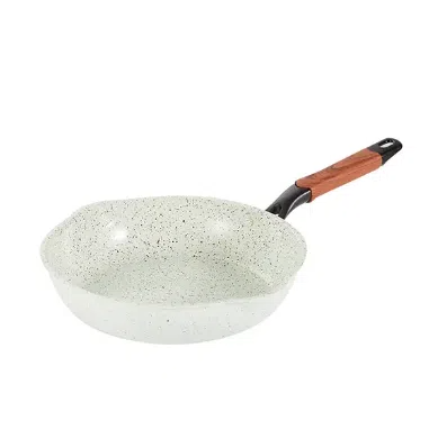
In this post, we’ll explain what ceramic non stick coating is, how it works, where it is used, and how it compares with traditional Non Stick Coating. You’ll also learn its key advantages, limitations, safety considerations, testing requirements, and how to choose the right Non Stick Coating manufacturer.
Ceramic non stick coating is a surface coating system designed to reduce food adhesion and make cookware or food-contact products easier to clean. It is commonly used on metal substrates such as aluminum, die-cast aluminum, stainless steel, and carbon steel. Although the word “ceramic” may sound like the whole pan is made of ceramic material, in most cookware applications it usually refers to a ceramic-like coating layer applied to the surface of the product.
In many modern applications, ceramic non stick coating is based on sol-gel coating technology. A liquid coating material is applied to the prepared metal surface and then cured under controlled temperature conditions. After curing, the coating forms a hard, smooth, and glossy surface that helps reduce sticking during cooking.
Ceramic non stick coating is often selected as a PTFE-free alternative to traditional Non Stick Coating. This makes it attractive for cookware brands that want to develop modern, health-conscious, colorful, and eco-positioned product lines. However, ceramic non stick coating should not be understood only as a marketing term. Its real performance depends on formula quality, substrate preparation, spraying process, curing control, coating thickness, and final quality testing.
For B2B buyers, the most important point is this: ceramic non stick coating is not one single product. Different suppliers may offer different formulas, colors, gloss levels, performance grades, and application methods. A high-quality ceramic non stick coating can support good food release and easy cleaning, while a low-quality coating may lose performance quickly after repeated use.
Ceramic non stick coating works by creating a smooth surface that reduces the ability of food to bond strongly with the cookware surface. When food contact is reduced, cooking becomes easier, oil usage may be reduced, and cleaning after cooking becomes more convenient.
The coating surface, surface energy, curing quality, and coating structure all influence non stick performance. A properly designed ceramic non stick coating can help eggs, pancakes, fish, vegetables, sauces, and baked foods release more easily from the surface. However, release performance is not only about the coating name. It also depends on how the coating is applied and how the product is used.
Sol-gel technology plays an important role in many ceramic non stick coating systems. In simple terms, sol-gel technology starts as a liquid system and forms a solid coating film after drying and curing. This process can create a hard, smooth, and heat-resistant surface. Manufacturers can adjust the formula to achieve different colors, textures, gloss levels, hardness, and performance levels.
Process control is essential. If the substrate is not cleaned properly, the coating may not adhere well. If the spraying is uneven, the surface may show weak release areas or visual defects. If the curing temperature is too low, the coating may not fully form its designed properties. If the curing temperature is too high, color, gloss, or coating performance may be affected.
This is why professional production control is just as important as the coating material itself. Ceramic non stick coating quality is created by both chemistry and manufacturing discipline.
Ceramic non stick coating and traditional Non Stick Coating are both designed to improve food release and cleaning performance. However, they are based on different material technologies and often serve different market positions.
Traditional Non Stick Coating usually refers to PTFE-based or fluoropolymer-based systems. These coatings are widely used in frying pans, woks, saucepans, bakeware, rice cooker inner pots, and electric grill plates. They are known for excellent food release, mature production technology, and stable performance under normal cooking conditions.
Ceramic non stick coating is usually chosen for PTFE-free product positioning, modern appearance, heat-resistant image, and colorful cookware design. It often has a harder surface feel than traditional PTFE-based Non Stick Coating. This gives ceramic non stick coating a premium and durable surface impression, especially in retail cookware products.
However, ceramic non stick coating is not automatically better than traditional Non Stick Coating in every situation. Traditional Non Stick Coating often provides stronger long-term release performance in many high-quality systems. Ceramic non stick coating may be more suitable for brands focusing on PTFE-free claims, modern design, and lifestyle positioning.
The best choice depends on product use, target market, compliance requirements, price level, expected durability, and brand strategy.
Factor | Ceramic Non Stick Coating | Traditional Non Stick Coating |
Main Technology | Commonly sol-gel based | Often PTFE or fluoropolymer based |
Market Positioning | PTFE-free, modern, colorful, health-conscious | Mature, high-release, mainstream, performance-focused |
Food Release | Good release, especially when new and properly used | Excellent food release in many premium systems |
Surface Feel | Harder ceramic-like surface | Smooth and soft release surface |
Heat Resistance | Strong heat-resistant image | Suitable for normal cooking temperatures |
Color Options | White, cream, beige, pastel, and customized colors | Black, gray, granite, marble, and custom finishes |
Durability | Depends strongly on formula, curing, and user care | Stable when properly formulated and applied |
Best Applications | Color cookware, PTFE-free cookware, appliance plates, bakeware | Frying pans, woks, rice cooker pots, bakeware, industrial release surfaces |
Buyer Concern | Long-term release and correct marketing claims | PFAS discussions and overheating concerns |
Supplier Role | Formula customization and process control are critical | Layer structure and performance grade are critical |
Ceramic non stick coating has several features that make it attractive to cookware brands and product developers.
The first feature is PTFE-free positioning. Many brands choose ceramic non stick coating because it allows them to develop product lines that are different from traditional PTFE-based cookware. This positioning is especially useful for brands targeting health-conscious consumers, modern kitchen design buyers, and markets where PFAS-related discussions influence purchasing decisions.
The second feature is heat resistance. Ceramic non stick coating is often associated with good heat resistance and is commonly used on products that require a stable cooking surface under heat. Examples include frying pans, grill pans, electric grill plates, air fryer baskets, and bakeware. However, actual heat resistance depends on the formula, substrate, coating thickness, and application process.
The third feature is surface hardness. Ceramic non stick coating usually feels harder than many traditional non stick surfaces. This hard surface can help improve the consumer’s perception of scratch resistance. Still, hardness does not mean the surface is impossible to damage. Metal utensils, abrasive pads, overheating, and harsh cleaning can still reduce coating life.
The fourth feature is easy cleaning. A good ceramic non stick coating helps reduce food residue, oil buildup, and staining. This is important for both household cookware and commercial food-contact products. Easy cleaning also improves the user experience and may reduce negative product reviews.
The fifth feature is design flexibility. Ceramic non stick coating can support modern colors such as white, cream, beige, green, blue, gray, and pastel tones. For cookware brands, color is not only decoration. It helps products stand out in online stores, retail shelves, and private-label collections.
Ceramic non stick coating offers clear benefits for cookware and appliance manufacturers.
One major advantage is brand differentiation. Many traditional non stick pans are black or dark gray. Ceramic non stick coating allows brands to create brighter, softer, and more lifestyle-oriented cookware designs. This is especially valuable for e-commerce brands, premium cookware lines, and private-label product collections.
Another advantage is PTFE-free product positioning. As more buyers ask about PTFE, PFOA, and PFAS-related issues, ceramic non stick coating gives brands another option for product development. When properly supported by test reports and supplier documentation, this positioning can strengthen buyer confidence.
Ceramic non stick coating also provides a hard surface feel. This can make the product feel more premium and durable. For many consumers, the surface texture and visual appearance of ceramic non stick coating create a cleaner and more modern impression than traditional dark non stick surfaces.
Good initial food release is another benefit. High-quality ceramic non stick coating can perform well for common cooking tasks such as eggs, pancakes, vegetables, fish, and low-oil cooking. For bakeware, ceramic non stick coating can help reduce sticking and make cleaning easier after baking.
Ceramic non stick coating is also useful for kitchen appliances. Air fryer baskets, removable grill plates, sandwich maker plates, waffle maker plates, and electric hot pot liners all require easy-clean surfaces. A customized ceramic non stick coating can help appliance brands improve product usability and visual appeal.
Although ceramic non stick coating has many advantages, buyers should also understand its limitations.
The first limitation is that release performance may decline over time if the coating is not properly formulated, applied, or maintained. Some ceramic-coated products may require more oil after repeated use. High heat, dry heating, abrasive cleaning, and metal utensils can accelerate performance loss.
The second limitation is that not all ceramic non stick coating systems are the same. Two products may both be called ceramic, but their formulas, curing conditions, film thickness, hardness, adhesion, and food release performance may be very different. Buyers should not judge coating quality only by product name.
The third limitation is that ceramic non stick coating requires strict production control. The substrate must be prepared correctly. The coating must be sprayed evenly. The curing process must be stable. Quality testing must be consistent. Without these controls, ceramic non stick coating may show problems such as peeling, weak adhesion, uneven color, poor gloss, pinholes, orange peel, or reduced release.
The fourth limitation is marketing risk. Terms such as “non-toxic,” “chemical-free,” and “100% safe” can be misleading if not supported by clear testing and regulatory documentation. A professional manufacturer should use accurate, test-supported language such as PTFE-free, PFOA-free, or PFAS-free only when the coating and documentation support those claims.
Ceramic non stick coating is used in a wide range of cookware, bakeware, appliance, and food-contact applications.
In cookware, ceramic non stick coating is commonly used for frying pans, saucepans, stock pots, milk pans, grill pans, and woks. It is especially popular in colorful cookware collections and PTFE-free product lines. For frying pans, the main requirements are food release, scratch resistance, easy cleaning, heat stability, and attractive appearance.
In bakeware, ceramic non stick coating can be used for baking trays, cake molds, bread pans, muffin pans, roasting pans, and pizza pans. Bakeware requires good release performance after repeated heating cycles. The coating should resist staining, oil residue, sugar residue, and cleaning damage.
In kitchen appliances, ceramic non stick coating can be applied to air fryer baskets, rice cooker inner pots, electric grill plates, sandwich maker plates, waffle maker plates, and electric hot pot liners. These products often require customized coating solutions because each appliance has different heating methods, substrate shapes, operating temperatures, and cleaning habits.
Ceramic non stick coating can also be used in some food-contact and industrial release applications. Examples include food processing parts, reusable molds, heating plates, release trays, and customized metal components. In these applications, durability, adhesion, chemical resistance, and cleaning performance may be even more important than appearance.
Application | Key Requirements | Why Ceramic Non Stick Coating May Be Used |
Frying Pans | Food release, easy cleaning, heat resistance, appearance | Supports PTFE-free and colorful cookware lines |
Sauce Pans | Stain resistance, water resistance, easy cleaning | Helps improve daily cooking convenience |
Bakeware Trays | Release performance, oil resistance, repeated heating | Suitable for modern bakeware product lines |
Air Fryer Baskets | Heat resistance, oil resistance, abrasion resistance | Improves cleaning and product appearance |
Rice Cooker Inner Pots | Water resistance, rice release, adhesion | Requires durable and easy-clean coating |
Electric Grill Plates | Heat stability, scratch resistance, easy cleaning | Useful for removable appliance plates |
Food Processing Parts | Stable release, cleaning resistance, production efficiency | Can reduce residue and improve maintenance |
Private-Label Cookware | Color, branding, compliance, performance | Helps create differentiated product collections |
Before choosing ceramic non stick coating, buyers should evaluate several performance factors.
Food release is the most direct factor. Buyers should test how easily eggs, pancakes, fish, rice, dough, sugar-based foods, and sauces release from the surface. Initial release is important, but long-term release after repeated use is even more meaningful.
Adhesion is another critical factor. Poor adhesion may cause peeling, blistering, or early coating failure. Adhesion depends on substrate preparation, coating formula, spraying process, and curing quality. For cookware and appliance parts, adhesion failure can seriously damage brand reputation.
Abrasion resistance should also be tested. Daily cooking, cleaning, stacking, and utensil contact can wear the coating surface. A ceramic non stick coating with better abrasion resistance can help extend product life.
Scratch resistance is related to surface hardness, but the two are not exactly the same. A hard coating can still be damaged by sharp metal tools or abrasive cleaning pads. Product instructions should recommend silicone, wooden, or nylon utensils for longer service life.
Heat resistance must match the product application. A frying pan, oven tray, air fryer basket, and electric grill plate may experience different temperatures and heating cycles. The coating should be selected according to real working conditions, not only catalog claims.
Cleaning resistance is also important. Some products may need dishwasher testing, boiling water testing, detergent resistance testing, or stain resistance testing. Although hand washing is often recommended for longer coating life, many buyers still want to know how the coating performs under more demanding cleaning conditions.
A professional ceramic non stick coating project should include both laboratory testing and production quality control. Testing helps buyers compare coating systems objectively and avoid relying only on marketing language.
Common tests include adhesion testing, abrasion testing, scratch testing, food release testing, boiling water testing, salt spray testing, film thickness measurement, gloss testing, color difference testing, and heat resistance testing.
Food release testing is especially important because it reflects real user experience. A coating may look beautiful but fail if food sticks too easily. For cookware, egg release and pancake release are common reference tests. For bakeware, dough release, cake release, and sugar residue tests may be used.
Abrasion testing helps evaluate long-term surface durability. Scratch testing helps assess resistance to daily handling and utensil contact. Boiling water testing is useful for rice cooker pots, saucepans, and products exposed to water. Salt spray testing may be important for metal substrates that require corrosion resistance.
Film thickness control is also important. If the coating is too thin, durability may suffer. If it is too thick, appearance, curing, adhesion, or cost may be affected. Stable film thickness helps ensure consistent mass production quality.
For B2B buyers, the best approach is to request test samples, compare real performance data, and confirm whether the supplier can maintain the same quality during mass production.
Ceramic non stick coating can be suitable for cookware and food-contact products when it is properly formulated, applied, cured, and tested according to relevant food-contact requirements. Safety should be evaluated through documents, test reports, and compliance standards rather than marketing claims alone.
Buyers should ask suppliers for food-contact documentation based on the target market. Common requirements may include FDA-related food contact support for the U.S. market, LFGB testing for Germany, EU food contact requirements, REACH-related information, Safety Data Sheets, Technical Data Sheets, and customer-specific test reports.
PTFE-free and PFAS-free claims should be handled carefully. Ceramic non stick coating is often selected for PTFE-free positioning, but every claim must match the actual formula and testing support. If a brand wants to claim PFAS-free, the supplier should provide reliable documentation and testing evidence.
Manufacturers should avoid vague claims such as “chemical-free.” In a scientific sense, all coatings are made from chemicals. More professional language focuses on specific, verifiable claims, such as PTFE-free, PFOA-free, PFAS-free, food-contact tested, or compliant with specified standards.
This careful approach protects the buyer, the brand, the retailer, and the final consumer.
The service life of ceramic non stick coating depends on many factors. There is no single lifespan that applies to every product. A premium ceramic non stick coating applied with strict process control will usually perform better than a low-cost coating applied under unstable production conditions.
Important factors include coating formula, substrate material, surface pretreatment, coating thickness, curing quality, product design, cooking temperature, utensil type, cleaning method, and user maintenance.
For example, a thick aluminum frying pan with proper surface preparation and controlled curing may support better coating stability than a thin, poorly prepared substrate. A pan used at medium heat with silicone utensils and gentle hand washing may last longer than a pan exposed to high heat, metal tools, and abrasive cleaners.
Users can extend coating life by following simple care instructions:
● Use low to medium heat when possible.
● Avoid empty-pan overheating.
● Use silicone, wooden, or nylon utensils.
● Avoid steel wool and abrasive pads.
● Let cookware cool before washing.
● Wash gently with soft sponges.
● Avoid sudden temperature shock.
● Follow the manufacturer’s care instructions.
For brands, clear user guidance can reduce complaints and improve customer satisfaction.

Choosing the right supplier is one of the most important decisions in a ceramic non stick coating project. A professional Non Stick Coating manufacturer should provide more than coating material. The supplier should support product development, sample testing, process adjustment, compliance documents, and production problem solving.
First, evaluate technical experience. The supplier should understand cookware, bakeware, kitchen appliances, and food-contact applications. They should know how different substrates affect adhesion, curing, appearance, and durability.
Second, evaluate customization ability. Different brands may need different colors, gloss levels, textures, coating thicknesses, and performance grades. A good supplier should be able to develop customized ceramic non stick coating solutions instead of offering only one standard formula.
Third, evaluate testing support. The supplier should be able to support adhesion testing, abrasion testing, scratch testing, food release testing, boiling water testing, heat resistance testing, and compliance-related documentation. Testing support helps buyers reduce sourcing risk.
Fourth, evaluate production stability. Batch-to-batch consistency is critical for mass production. A coating that works well in a small sample but performs inconsistently in mass production can create serious problems for cookware brands and OEM factories.
Fifth, evaluate after-sales technical support. During production, problems such as poor adhesion, pinholes, orange peel, color difference, weak release, and curing defects may occur. A reliable supplier should help identify root causes and provide practical solutions.
Ceramic non stick coating is especially useful for OEM and private-label cookware brands because it supports both product performance and brand storytelling. A private-label brand may want a cream-colored frying pan series, a pastel bakeware collection, a PTFE-free air fryer basket, or a premium cookware set with modern kitchen aesthetics. Ceramic non stick coating can support these goals when properly developed.
For OEM factories, ceramic non stick coating can help expand product offerings and meet customer requests for PTFE-free, colorful, easy-clean, and modern cookware lines. However, OEM factories should not treat ceramic non stick coating as a simple replacement for traditional Non Stick Coating. They should confirm the coating’s performance level, application method, curing requirements, testing standards, and target market documentation before mass production.
For brand owners, ceramic non stick coating can help create a stronger market identity. In online retail, visual appeal matters. Product photos, color consistency, and clean surface design can influence conversion rates. At the same time, real performance still matters because customer reviews often focus on sticking, cleaning, scratches, stains, and coating life.
The best ceramic non stick coating projects combine design, testing, compliance, and manufacturing control.
Ceramic non stick coating is widely used in cookware, bakeware, kitchen appliances, and other food-contact products because it supports food release, easy cleaning, modern appearance, heat-resistance positioning, and PTFE-free product development.
Its performance depends on coating formula, substrate preparation, application process, curing control, and proper use. For cookware brands, OEM factories, and industrial buyers, choosing the right coating system is essential for product quality and market competitiveness. Zhongshan Flead Coatings Co., Ltd. provides customized ceramic non stick coating solutions, technical support, and stable production quality for different application needs.
Ceramic non stick coating is commonly based on sol-gel coating technology. It is applied as a liquid coating and then cured to form a smooth, hard coating layer that helps reduce food sticking and improve cleaning performance.
No. Ceramic non stick coating is usually different from traditional PTFE-based Non Stick Coating. Ceramic coating is often chosen for PTFE-free product positioning, while PTFE-based Non Stick Coating is widely known for excellent food release performance.
Ceramic non stick coating can be suitable for cookware when it is properly formulated, applied, cured, and tested for food-contact use. Buyers should request relevant test reports, compliance documents, Technical Data Sheets, and Safety Data Sheets from the supplier.
Its service life depends on coating quality, substrate preparation, curing process, cooking temperature, cleaning method, utensil type, and user care. High-quality ceramic non stick coating usually performs better when used at moderate heat and cleaned gently.
Yes. A professional Non Stick Coating manufacturer can customize ceramic non stick coating for frying pans, bakeware, rice cooker inner pots, air fryer baskets, electric grill plates, sandwich maker plates, and other food-contact components. Customization may include color, gloss, texture, coating thickness, and performance level.

How Can Hair Straightener Coating Keep Heating Plates Smooth?

How Can Water Based Fluorine-Free Coating Fit a Mass Spray Line?

How Can Three Layer Coating Stay Consistent in Continuous Production?

How Can Frying Pan Coating Balance Food Release and Wear Resistance?
Water Based Fluorine-Free Coating for Rice Cooker Inner Pots

How Non-Stick Coatings Are Manufactured Step by Step

How Nano Ceramic Coating Improves Cookware Performance

How Long Does Non-Stick Coating Last?

Single Layer vs Double Layer Coating: Key Differences

Applications of Non-Stick Coating in Kitchen Appliances

