


Views: 0 Author: Site Editor Publish Time: 2026-10-27 Origin: Site


Does your favorite skillet sometimes leave a harsh, metallic tang on your palate? We see this issue frequently in the cookware manufacturing sector. Aluminum is highly valued for its exceptional thermal conductivity and lightweight nature. However, it is not entirely food-neutral in its raw state. When raw aluminum meets acidic ingredients, aggressive chemical reactions occur. The metal corrodes rapidly. Ultimately, this ruins the flavor profile of your carefully prepared meals.
In this technical guide, we will break down the science behind protective surface layers. You will discover exactly how advanced polymer technologies safeguard kitchen investments. We will look at preventing chemical leaching and elevating daily cooking by completely isolating delicate ingredients from reactive metals.
From a metallurgical standpoint, aluminum is an inherently porous and reactive metal. When exposed to ambient oxygen, it forms a natural oxide layer just a few nanometers thick. This microscopic shield offers mild defense against everyday moisture. But let us be realistic—it proves entirely insufficient against the intense heat and harsh chemical environments of an active kitchen. Without additional reinforcement, acidic components like tomato sauce or alkaline substances like baking soda will rapidly strip away the metal's natural defenses.
To combat this vulnerability, an engineered aluminum cookware coating acts as a specialized, high-performance sealant. By applying a continuous, non-porous polymeric film directly over the metal substrate, we isolate the reactive aluminum from external chemical triggers. Consequently, this physical barrier effectively halts both galvanic and chemical corrosion. As long as the integrity of the sealant remains intact, destructive moisture, salts, and acids remain locked out. This ensures the pan stays structurally sound and entirely food-safe over an extended operational lifespan.
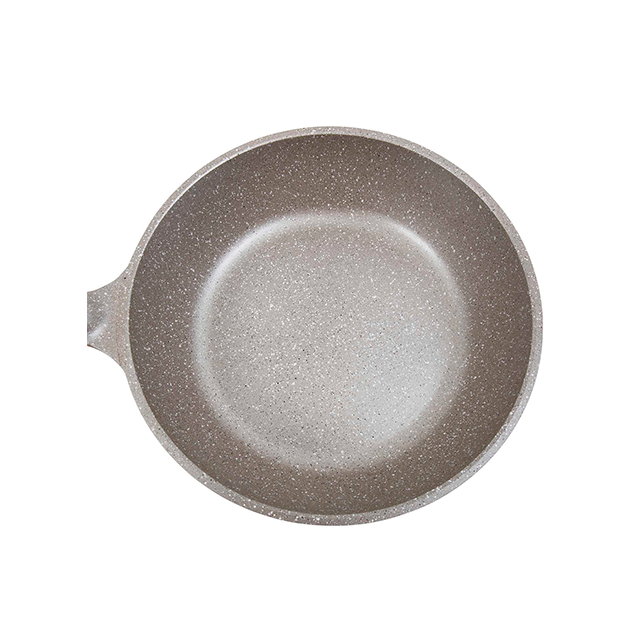
To fully appreciate the value of these protective barriers, you need to understand the fundamental chemistry happening inside your pan during a searing session. Aluminum is an amphoteric metal. This means it possesses the unique ability to react chemically with both acids and bases.
When raw aluminum is heated alongside acidic foods, a chemical exchange occurs that produces aluminum salts and hydrogen gas. This active process literally dissolves the surface of the metal. Over time, this dissolution manifests as pitting, leaving tiny, jagged craters scattered across the cooking zone. Pitting not only degrades the structural integrity of the cookware but also creates micro-cavities where food particles trap and burn. By applying a stable, inert layer over the metal, manufacturers neutralize this chemical vulnerability completely.
| Food Ingredient | pH Level | Effect on Bare Aluminum | Effect on Coated Aluminum |
|---|---|---|---|
| Lemon Juice / Vinegar | 2.0 - 3.0 Highly Acidic | Rapid pitting, metal leaching, metallic taste. | No reaction; barrier remains completely stable. |
| Tomato Sauce | 4.0 - 4.5 Acidic | Gradual surface discoloration and minor pitting. | No reaction; surface remains smooth and neutral. |
| Tap Water | 6.5 - 7.5 Neutral | Slow oxidation over prolonged exposure. | No reaction; repels moisture effectively. |
| Baking Soda Solutions | 8.0 - 9.0 Alkaline | Surface etching and dark gray discoloration. | No reaction; alkaline compounds cannot penetrate. |
Specifically, when balancing functional performance with production efficiency, many manufacturers turn to streamlined solutions for everyday kitchenware. A single layer non stick coating serves as a highly efficient option. It is particularly suited for lightweight items like baking sheets, crepe pans, and low-heat breakfast skillets.
From an engineering perspective, this system typically measures between 10 and 15 microns in thickness. The liquid finish is sprayed and cured in a single pass, requiring a curing temperature around 380 to 400 degrees Celsius. Despite featuring a thinner profile compared to multi-layered counterparts, a well-engineered single-layer system mounts a robust defense against minor corrosion. The secret to its efficacy lies in application uniformity. Provided the liquid finish is cured without microscopic pinholes or defects, it completely seals the base metal. This ensures the surface remains chemically neutral during standard cooking temperatures.
In contrast, commercial-grade longevity and superior chemical resistance are non-negotiable for professional kitchens. These environments demand a much more rigorous defense. A three layer water based PTFE coating provides an incredibly dense, multi-tiered structural barrier that vastly outperforms simpler alternatives.
This advanced engineering relies on distinct mechanical and chemical roles for each tier, building a total film thickness of 35 to 45 microns. The foundational primer, roughly 10 to 15 microns thick, utilizes high-adhesion resins to lock securely into the roughened aluminum. It actively blocks any moisture attempting to seep underneath. Next, the 15 to 20 micron mid-coat acts as structural armor. It is reinforced with hard, inert mineral fillers like silicon carbide to resist severe abrasion from heavy spatulas. Finally, the pure PTFE top-coat delivers the ultimate non-stick release properties.
Furthermore, the transition to a water-based formula represents a major leap in manufacturing safety. By utilizing water as the primary solvent carrier, these advanced systems drastically reduce the emission of Volatile Organic Compounds during the high-heat curing cycle. This creates a safer production environment while maintaining industrial-grade corrosion resistance.
A protective barrier is only as effective as its bond to the underlying metal substrate. Raw aluminum possesses a naturally smooth surface. Applying a polymer directly to the metal guarantees poor adhesion. Under the stress of searing temperatures and mechanical friction, an improperly bonded film will quickly blister or flake off. This leaves the bare aluminum exposed to the very acids that accelerate corrosion. To prevent this catastrophic failure, manufacturers employ rigorous surface preparation techniques.
The most common industrial method for preparing aluminum cookware is abrasive blasting. High-velocity abrasive particles, such as aluminum oxide, are propelled against the smooth pan surface. This action strips away residual manufacturing oils and etches the metal to create a microscopic peak and valley texture known as an anchor profile. When the liquid primer is applied, it flows deep into these valleys. Once cured, the polymer is mechanically locked into the metal, drastically reducing the risk of peeling and preventing corrosive liquids from seeping beneath the non-stick surface.
For premium cookware lines, engineers often utilize an electrochemical process called anodizing prior to coating application. Hard-anodized aluminum is submerged in an acid bath and subjected to an electrical current, forcing the natural oxidation process to occur rapidly. This creates a thick, highly dense, and exceptionally hard layer of aluminum oxide. Because this anodic layer is highly porous at a microscopic level, the subsequent non-stick polymer deeply penetrates the surface. The result is a synergistic, dual-layer shield capable of withstanding severe thermal and mechanical stress.
Looking at recent developments across the cookware manufacturing sector, there is a clear, industry-wide pivot toward sustainability combined with enhanced consumer safety. Market analysis indicates a surging demand for eco-friendly surface treatments that do not compromise on heavy-duty durability. Manufacturers are heavily investing in research and development to optimize water-based polymeric dispersions. The industry is moving decisively away from legacy solvent-heavy processes that harm air quality.
Moreover, the contemporary focus is on achieving superior corrosion resistance without relying on controversial chemical processing aids. Modern metallurgical trends highlight a rising adoption of hybrid ceramic-PTFE composites and advanced plasma-bonding techniques. These cutting-edge innovations extend the lifecycle of the aluminum core by thoroughly preventing acidic pitting. They also align perfectly with increasingly stringent global environmental regulations. This shift reflects a modern consumer base that demands both high culinary performance and ecological responsibility, driving the industry toward cleaner, more resilient technologies.
Understanding the technical specifications of cookware finishes allows you to make informed purchasing decisions based on specific culinary needs. Not all barriers offer the same level of thermal stability or defense against acidic ingredients. Stop looking just at the color of the pan; evaluate the engineering behind it.
The number of applied layers directly correlates with the pan's ability to resist wear and prevent chemical leaching. Entry-level items typically feature 10 to 15 micron single-layer systems. These are cost-effective but best suited for low-friction, low-acid cooking like frying eggs. For heavy domestic or commercial use, investing in a 35 to 45 micron multi-layer system ensures maximum durability. You need that dedicated primer for adhesion and a reinforced mid-coat for abrasion resistance.
Modern manufacturing standards have shifted towards environmentally conscious formulations. When evaluating a product, look for clear indicators regarding its chemical makeup. Ensure the cookware explicitly states it is manufactured without PFOA. Prioritizing water-based systems supports safer manufacturing practices, as these formulas drastically reduce the emission of harmful gases during production.
Even industrial-grade systems fail under abuse. The longevity of your cookware's corrosion resistance relies entirely on maintaining a continuous physical barrier. Once microscopic scratches penetrate through the top layers down to the aluminum base, capillary action draws acidic liquids underneath the film. This leads directly to blistering and under-film corrosion.
The most frequent cause of premature failure is the use of improper utensils. Scraping fond off the bottom of a pan with a metal spatula concentrates excessive force into a tiny area. This easily exceeds the tensile strength of the polymer, creating deep gouges. To maintain the structural integrity of the barrier, always use soft tools crafted from silicone or wood.
Thermal shock occurs when cookware experiences a rapid and extreme change in temperature. Throwing a sizzling pan directly into a sink of cold water is a massive mistake. Aluminum and polymeric materials possess different coefficients of thermal expansion. Rapid cooling causes the metal to contract much faster than the finish. This breaks the adhesive bond and causes flaking. Always allow your cookware to cool to room temperature naturally on the stovetop.
While many pans are marketed as dishwasher safe, material scientists universally recommend hand washing. Dishwasher pods are highly alkaline. They contain aggressive scrubbing agents designed to strip baked-on food. This harsh chemical environment will slowly degrade the top-coat over time. Hand washing with a soft sponge and mild dish soap remains the most effective way to preserve chemical resistance.
Investing in high-quality surface protection is the most effective strategy to extend the life of your aluminum pots and pans. An impermeable physical barrier stops chemical corrosion in its tracks, ensuring your culinary creations remain safe and untainted. Are you looking to upgrade your cookware manufacturing line with superior corrosion resistance? Whether you need an efficient single-pass application for daily kitchenware or a robust, multi-tiered matrix for professional-grade pans, selecting the right chemical formulation is critical. Explore industry-leading, eco-friendly solutions and find the perfect match for your production needs at FLD Coating.
While raw aluminum is utilized in specific commercial restaurant settings, it requires meticulous management and specialized cleaning protocols. Raw aluminum is highly reactive to acidic and alkaline foods, such as tomatoes, wine, or citrus. Cooking these ingredients in uncoated aluminum can lead to surface pitting, oxidation, and the leaching of metallic flavors into the food. For residential kitchens, utilizing a coated pan is significantly safer and simplifies the maintenance process.
Yes. From a structural and chemical engineering perspective, a multi-tiered system offers superior performance. It is constructed with a dedicated primer that chemically bonds to the metal substrate, a mid-coat reinforced with hard particles to resist mechanical wear, and a top-coat optimized for non-stick properties. This structural complexity is significantly more resistant to abrasion, thermal stress, and chemical erosion.
The severity of the scratch dictates the necessary action. Superficial surface scuffs that only affect the top non-stick layer generally do not compromise the safety of the pan, though food may begin to stick in that area. However, if a deep scratch penetrates through the primer and exposes the bare silver aluminum base, the corrosion protection is officially compromised. Acidic liquids can now reach the metal. It is objectively recommended to replace the cookware once the base metal is exposed.
Hard-anodized aluminum typically features a distinct dark gray, matte black, or deep bronze finish on the exterior. The metal feels significantly heavier and more rigid than standard stamped aluminum. Anodizing thickens the natural oxide layer of the aluminum, making it highly resistant to physical deformation. When a non-stick polymer is applied over an anodized base, it results in an exceptionally durable cooking surface.
Yes, water-based formulations represent a more environmentally responsible manufacturing approach. Traditional solvent-based coatings rely on harsh chemicals that release significant amounts of Volatile Organic Compounds into the atmosphere during the high-heat curing process. Modern water-based systems utilize water as the primary carrying agent, drastically reducing harmful emissions and minimizing the ecological footprint.
Excessive heat is detrimental to polymeric barriers. While modern formulations are cured at high temperatures, consistently exposing a dry pan to temperatures exceeding 260 degrees Celsius can degrade the polymer matrix. When the coating overheats, it loses its non-porous structure, allowing microscopic pathways to form where acids can eventually penetrate and reach the aluminum substrate.
No. As long as the engineered coating remains continuous and completely free of deep scratches, it acts as an impermeable physical barrier. Acidic ingredients like tomato sauce or vinegar will only interact with the inert top-coat, meaning they will not reach or react with the vulnerable aluminum core underneath.

What Hardness and Wear Resistance Does Demolding Coating Need?

How Can Cake Pan Coating Reduce Buildup Around Edges?

How Can Non Stick Coating Improve Corrosion Resistance on Aluminum Cookware?

How Is Durable Non Stick Coating Verified Through Abrasion Cycles?

How Do You Control Film Thickness in Water Based Fluorine-Free Coating?

Which Spray Parameters Matter for Sprinkled Non Stick Coating?

How Does Double Layer Coating Improve Primer and Topcoat Bonding?

How Can Frying Pan Coating Improve Coverage Around Curved Edges?

Nano Ceramic Coating Process for Electric Iron Soleplates

How Can Three Layer Coating Handle Thermal Cycling on Stainless Steel?

