


Views: 0 Author: Site Editor Publish Time: 2026-07-21 Origin: Site


The cookware industry is undergoing a massive shift driven by regulatory scrutiny and consumer demand to eliminate "forever chemicals," leading to a flood of "non-toxic" marketing claims. Buyers face a highly unregulated landscape where terms like "PFOA-free" are used to mask the presence of other PFAS chemicals. This deceptive labeling makes it difficult to verify if a supposedly safe product actually protects health without severely compromising cooking performance. Kitchen professionals and home cooks alike need clarity. This guide provides a technical, evidence-based framework for evaluating PFAS-Free Coating technologies. We analyze the trade-offs between chemical safety, thermal tolerance, and non-stick longevity to help you make an informed purchasing decision. You will learn how to spot misleading labels, understand the physical limitations of ceramic alternatives, and choose the right materials for your specific culinary techniques.
Per- and polyfluoroalkyl substances (PFAS) represent a massive class of thousands of synthetic chemicals. Manufacturers use them because they resist heat, oil, and water exceptionally well. Legacy chemicals like PFOA and PFOS dominated the market for decades before severe toxicity data forced their phase-out. However, the broader category still includes PTFE, commonly known as Teflon. Many brands simply swapped PFOA for newer, under-regulated PFAS compounds to maintain non-stick performance.
The primary concern revolves around environmental persistence and bioaccumulation. These chemicals do not break down naturally in the environment. They accumulate in water supplies, soil, and human tissue over time. In the kitchen, the immediate risk is thermal degradation. When you heat traditional PTFE beyond 500°F (260°C), the polymer matrix breaks down. This physical breakdown releases toxic gases directly into your breathing zone.
The toxicology of overheating is well-documented in both industrial and domestic settings. Thermal degradation byproducts include tetrafluoroethylene and hexafluoropropene. Inhaling these fumes causes polymer fume fever, often called "Teflon flu." Symptoms mimic severe viral infections, including chills, fever, and body aches. Regulatory bodies are now forcing phase-outs of specific PFAS compounds across multiple industries. This legislative pressure forces manufacturers to engineer alternative solutions that prioritize health safety without completely abandoning convenience.
Understanding the exact temperature thresholds is necessary for safe kitchen operations. A dry pan on a high BTU gas burner can exceed 500°F in less than three minutes. Most home cooks underestimate how quickly their pans heat up. This rapid heating creates a high-risk scenario for toxic off-gassing if you use traditional fluoropolymer surfaces.
Not all non-stick pans rely on fluoropolymers. The industry has developed several distinct categories to replace traditional PTFE. You must understand the material science behind each option to evaluate their practical utility.
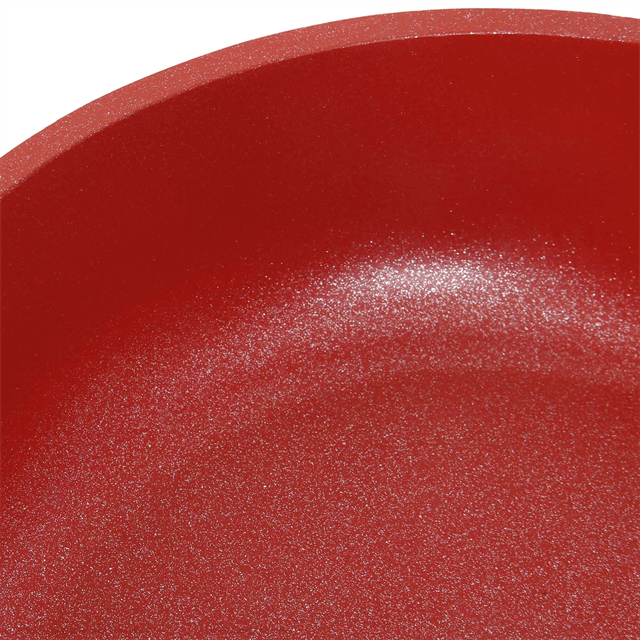
Ceramic coatings dominate the current market for chemical-free alternatives. They rely on sol-gel chemistry rather than traditional ceramic baking. Manufacturers take sand derivatives (silica) and transform them into a sprayable gel. Technicians apply this gel to the metal pan body and cure it in an industrial oven. The curing process forms a hard, slick surface. These formulations completely exclude fluoropolymers. They offer a smooth cooking surface without utilizing forever chemicals. The sol-gel process allows for vibrant colors and smooth finishes, but the resulting layer is physically brittle compared to flexible polymers.
Hard-anodized aluminum undergoes an electrochemical process. Technicians submerge raw aluminum in an acid bath and apply an electrical current. This treatment oxidizes the surface, hardening the raw aluminum and preventing it from leaching into food. The surface becomes highly durable, scratch-resistant, and non-reactive to acidic foods like tomatoes. However, you must read the fine print on the packaging. Hard-anodized surfaces are only free of forever chemicals if they are not subsequently sealed with a PTFE topcoat. Many brands apply traditional non-stick layers over anodized bases to combine durability with slickness.
You can achieve non-stick results with zero synthetic coatings. Seasoned cast iron and carbon steel serve as the ultimate baseline for chemical-free cooking. You build a natural barrier by polymerizing cooking oils over high heat. This creates a slick, renewable surface. High-grade stainless steel is another excellent option for professional results. It requires precise temperature control and proper fat utilization rather than relying on a physical coating. These materials represent the most durable eco cookware available on the market today.
Evaluating cookware requires looking past the marketing jargon. You must weigh chemical inertness against daily cooking performance and long-term durability.
Silica-based ceramics excel in chemical safety. High-quality sol-gel coatings remain inert even when scratched or overheated. They do not release fluorinated gases under extreme thermal stress. However, you must analyze the leaching potential of poorly manufactured glazes. Cheap ceramic pans can sometimes contain heavy metals like lead or cadmium in their color pigments. Always verify heavy metal testing before purchasing any brightly colored ceramic pan.
The community consensus among culinary professionals is clear. No current ceramic alternative performs with the effortless slickness of brand-new PTFE. There is a noticeable performance gap. The primary user complaint is rapid degradation. Ceramic pans often lose their non-stick properties within one to two years. This happens due to micro-abrasions. The sol-gel matrix slowly breaks down under thermal stress and friction, exposing the rougher substrate below. Once the microscopic silica peaks wear down, food begins to stick aggressively.
Ceramic-coated aluminum heats up quickly and distributes heat evenly across the cooking surface. Traditional multi-clad stainless steel retains heat better but takes longer to reach the target temperature. Ceramic coatings will not emit toxic odors at high temperatures. However, exposing them to extreme heat accelerates the physical breakdown of the silica layer. You trade chemical risk for physical degradation.
| Coating Type | Chemical Safety Profile | Non-Stick Longevity | Heat Tolerance |
|---|---|---|---|
| Traditional PTFE | Low (Toxic off-gassing > 500°F) | High (3-5 years) | Poor (Degrades rapidly at high heat) |
| Sol-Gel Ceramic | High (No PFAS, inert) | Low (1-2 years) | Moderate (Safe, but heat reduces lifespan) |
| Carbon Steel (Seasoned) | High (Natural oil polymer) | Lifetime (Requires maintenance) | Excellent (Handles extreme searing) |
| Hard-Anodized (Uncoated) | High (Non-reactive surface) | Lifetime (Not truly non-stick) | Excellent (Will not warp easily) |
Greenwashing is rampant in the kitchenwares sector. Manufacturers frequently use incomplete disclosures to sell products to health-conscious consumers.
A pan labeled "PFOA-free" likely still contains PTFE. PFOA is just one chemical that was banned years ago. Brands proudly display this label while utilizing newer-generation fluoropolymers. You need exact phrasing for true safety. Look for labels stating: "Manufactured without PFAS, PTFE, PFOA, lead, or cadmium." You must also look beyond the cooking surface. Check for adjacent toxins. Handles, accessory lids, and exterior glazes can contain BPA, BPS, and phthalates. A truly safe pan accounts for every material used in its construction.
Never trust manufacturer claims blindly. Look for independent laboratory test findings. Consumer Reports has tested popular brands to analyze which claims hold up under rigorous scrutiny. Request testing data regarding chemical composition. Verify compliance with California Prop 65 standards. When investing in a safe coating, always review the warranty and return policy to protect your purchase if the pan degrades prematurely. Independent validation separates legitimate engineering from clever marketing.
Switching to safer alternatives requires changing your habits in the kitchen. Failure to adapt will destroy your new pans in a matter of weeks.
Overheating ceramic pans leads to rapid failure. You must strictly adhere to low-to-medium heat cooking. Never use aerosolized cooking sprays. These sprays contain emulsifiers that burn at low temperatures. They leave a sticky carbon build-up that ruins the silica surface. Use liquid oils or butter instead. Allow the pan to cool completely before running it under water to prevent thermal shock and warping.
Abrasive cleaning destroys the silica layer. You must follow strict maintenance protocols to extend the life of your pans.
Synthetic alternatives struggle in heavy, daily culinary use. Commercial kitchens rarely use ceramic. The replacement cycle is too short to justify the cost. For high-volume environments, carbon steel and stainless steel remain the only viable, chemical-free options. Home cooks who prepare multiple meals daily should also consider mixing materials, using ceramic only for delicate tasks like eggs or fish.
A: PTFE (Teflon) is just one specific chemical within the massive PFAS family. A pan labeled "PTFE-free" might still use other fluorinated chemicals to achieve a non-stick surface. A product must be labeled entirely "PFAS-free" to exclude the entire class of forever chemicals.
A: Yes, from a chemical standpoint. A scratched ceramic pan will not leach forever chemicals. However, deep scratches may expose the underlying aluminum core. Cooking highly acidic foods on exposed aluminum can cause a metallic taste and minor leaching, reducing overall performance.
A: You can expect a realistic lifespan of one to three years. This timeline depends heavily on your heat exposure and cleaning habits. Using high heat or abrasive sponges will degrade the sol-gel matrix much faster than traditional PTFE.
A: Yes. Unlike brand-new PTFE, eco-friendly alternatives generally require a small amount of liquid lipid. A light coat of oil or butter maintains the physical barrier, prevents food adhesion, and protects the silica surface from direct thermal shock.
A: No. You should always hand-wash these pans. Dishwasher detergents are highly alkaline and contain harsh abrasives. These chemicals accelerate the degradation of the silica-based surface, ruining the non-stick properties in a matter of months.
A: No. Hard-anodization is simply an electrochemical process that hardens the aluminum base. While the bare anodized surface is safe, manufacturers frequently apply a secondary PTFE topcoat over it. You must verify that no synthetic non-stick layer was added.
A: Not necessarily. The term "PFAS-free" only guarantees the absence of fluorinated chemicals. Buyers must separately verify the absence of heavy metals in the ceramic glaze and plasticizers like BPA in the handles through full material disclosures.

Which Spray Parameters Matter for Sprinkled Non Stick Coating?

How Does Double Layer Coating Improve Primer and Topcoat Bonding?

How Can Frying Pan Coating Improve Coverage Around Curved Edges?

Nano Ceramic Coating Process for Electric Iron Soleplates

How Can Three Layer Coating Handle Thermal Cycling on Stainless Steel?

How Can Rice Cooker Inner Pot Coating Improve Rice Release?

How Can Aluminum Cookware Avoid Distortion During Coating Curing?

How Should Curing Temperature Be Set for Nano Ceramic Coating?

Which Formulation Factors Affect Non Stick Coating Scratch Resistance?

How Should Air Fryer Coating Be Tested for Oil and Cleaning Resistance?

