


Views: 0 Author: Site Editor Publish Time: 2026-06-10 Origin: Site


While single-layer coatings address basic release requirements, high-cycle industrial and commercial environments demand engineered durability. Single layers simply cannot sustain this relentless load. Today, OEM engineers, procurement managers, and product developers must evaluate high-performance surface solutions rigorously. We are witnessing a massive transition from traditional, rapidly degrading surfaces to advanced composite architectures. Evaluating these systems requires looking far beyond basic non-stick claims. You must examine abrasion metrics, surface energy, and substrate compatibility. A precisely engineered three-layer non-stick coating transforms operational lifespans across diverse sectors. This article unpacks how these multi-layer frameworks operate. You will learn the business rationale for upgrading. We will also outline strict technical evaluation criteria to help you specify the right formulations for extreme-use applications.
Architectural Advantage: A three-layer coating system isolates adhesion, wear resistance, and release properties into distinct functional layers, often doubling or tripling product lifespan.
Measurable ROI: Upgrading to multi-layer systems reduces industrial equipment downtime and elevates consumer product tiering (e.g., standard to premium cookware).
Evaluation Metrics: Procurement decisions should be driven by standardized data, including dry abrasion cycles, cross-cut adhesion tests, and sliding angle (hydrophobicity) measurements.
Compliance Reality: Modern formulations must balance performance with tightening regulatory standards (e.g., PFAS-free, PFOA-free, high-heat stability limits).
Traditional single-layer or basic sol-gel coatings suffer from premature wear under continuous friction or heat. These older formulations force a single chemical matrix to handle adhesion, strength, and release simultaneously. As a result, they fail rapidly. This premature degradation leads to catastrophic component failure. It compromises food hygiene in processing plants. For consumer brands, flaking surfaces generate immediate negative brand perception.
Upgrading to a sophisticated three-layer coating requires a mindset shift regarding lifecycle value. The initial application cost of a three-layer system is inherently higher due to multi-pass spray and curing requirements. However, the extended operational lifespan massively offsets ongoing replacement cycles. Industrial facilities reduce maintenance shutdowns. They avoid buying replacement parts constantly. You extract maximum value from your core machinery over years rather than months.
For OEMs, integrating a multi-layer system enables a highly effective product tiering strategy. Manufacturers can build a definitive "Good / Better / Best" product matrix. You justify premium positioning through documented longevity. Baseline systems might survive 5,000 abrasion cycles. Conversely, a reinforced three-layer framework can easily reach 30,000+ dry abrasion cycles. This quantifiable jump in durability allows brands to confidently market flagship products.
Product Tier | Coating Architecture | Typical Abrasion Cycles | Market Positioning |
|---|---|---|---|
Good (Entry) | Single-layer PTFE or basic ceramic | 3,000 - 8,000 | Budget-friendly, light intermittent use. |
Better (Mid-Range) | Two-layer reinforced systems | 10,000 - 20,000 | Standard commercial applications, daily use. |
Best (Premium) | Three-layer engineered composite | 30,000+ | High-cycle industrial, professional-grade. |
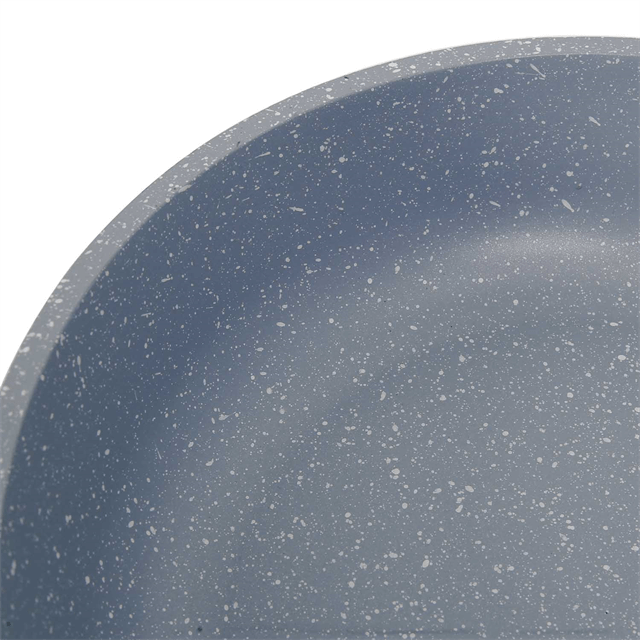
Multi-layer systems succeed because they separate specific mechanical duties. Instead of demanding one chemical layer do everything, chemists divide the workload. Each stratum serves a distinct, optimized purpose.
The primer acts as the foundational anchor. It binds directly to the pre-treated metal or alloy substrate. Without a resilient primer, the entire system collapses under sheer stress. The primer mechanisms prevent under-film corrosion. They also dictate the ultimate success of strict cross-cut adhesion tests. By chemically bonding to micro-abrasions on the base metal, the primer creates a locking effect. It ensures subsequent layers have a stable platform.
You can consider the midcoat as the structural core of any durable surface. Its primary function is robust physical reinforcement. Formulators often reinforce this layer utilizing ceramic, titanium, or silicon carbide particles. These microscopic additives absorb heavy physical impact. They resist deep scratches from metal tools or abrasive industrial materials. Most importantly, the midcoat prevents the topcoat from peeling. It bridges the flexibility of the primer and the slickness of the top tier.
The uppermost layer provides the immediate food or chemical release properties. Its function strictly focuses on shedding materials efficiently. It relies on a remarkably low Coefficient of Friction (CoF). This stratum features high contact and sliding angles. Superior topcoats approach omniphobic or superhydrophobic states. Liquids bead up instantly. Viscous industrial adhesives slide off without leaving residue. By isolating the release agent at the absolute top, the coating maintains maximum slickness.
Professional kitchens subject equipment to brutal treatment. Premium cookware coating applications must withstand daily metal utensil abrasion. They face highly acidic food environments, such as tomato sauces or citrus reductions. High thermal cycling—moving rapidly from a hot burner to a cold washing station—tests structural integrity. Three-layer systems maintain exceptional cake and protein release efficiency. They continue performing long after single-layer PTFE or basic ceramics degrade and blister.
Large-scale bakeries and food plants cannot afford line stoppages. They require continuous release on hoppers, conveyors, and industrial baking coils. Crucially, they must achieve this without degrading food safety. A multi-layer solution ensures uninterrupted throughput. You severely reduce mandatory cleaning shutdowns. Furthermore, premium triple-layer formulations comply with the most stringent global food-grade safety standards. They resist sugary build-ups and heavy dough adhesion effortlessly.
Manufacturing environments demand extreme durability. Molds and rollers require an industrial coating that delivers low shear strength. High chemical resistance is vital for demolding plastics, curing rubber, or managing volatile adhesives. A reinforced three-layer fit mitigates the risk of ablative or sacrificial coating failure. It ensures consistent part geometry over thousands of injection or pressing cycles. Tooling maintains sharp tolerances because operators do not need to scrape off hardened residues mechanically.
Procurement teams must move past marketing terminology. You must evaluate surface solutions based on hard data and standardized testing metrics.
Material chemistry dictates operational limits. You must match the core material to your specific thermal and physical environment.
Fluoropolymers (e.g., PTFE/FEP): These materials offer superior long-term release capabilities. They boast excellent impact resistance because they remain slightly flexible. However, they face strict thermal degradation limits. They typically break down around 260°C (500°F). If your process stays below this limit, fluoropolymers provide unmatched slickness.
Sol-Gel/Ceramic Hybrids: These alternatives offer significantly higher thermal stability. They can endure temperatures up to 370°C (700°F). They also exhibit extreme surface hardness. Though incredibly tough against heat, they historically exhibit a shorter peak non-stick lifespan compared to premium PTFE. They can also be brittle under sudden mechanical shock.
Demand transparent supplier data before committing to a coating system.
Durability: Always demand data on Dry Abrasion Cycles. Rotary abrasion testing provides a clear, numerical baseline for how much physical abuse the surface can take before exposing the bare metal.
Adhesion: Verify internal bonding performance via Cross-Cut Adhesion Tests (ASTM D3359). This test scores how well the primer sticks to the substrate when aggressively scored and pulled with specialized tape.
Hydrophobicity: Evaluate contact angle and sliding angle degradation over time. A fresh surface might show a 110° contact angle. You must know how quickly that angle drops after 1,000 heating cycles.
Chemical regulations are tightening globally. Ensure the selected formulation aligns perfectly with regional legislation. You must confirm the complete elimination of PFOA. If required by your target market, investigate a transparent transition to GenX formulas. In many consumer sectors, buyers now demand completely PFAS-free alternatives. Modern three-layer composites can achieve these eco-friendly benchmarks without sacrificing industrial-grade durability.
Specifying the right chemical formula represents only half the battle. Poor application protocols will ruin the most advanced materials. You must control the factory floor implementation strictly.
Substrate preparation is absolutely non-negotiable. Even the most sophisticated formulations engineered for a long-lasting non-stick finish will fail without proper surface roughness. We emphasize the absolute necessity of precise sandblasting or chemical etching prior to primer application. If the base metal is too smooth, the primer has nothing to grip. The entire three-layer stack will eventually delaminate under thermal stress.
You must also distinguish between machined versus additive substrates. Surface roughness varies wildly between subtractive manufacturing (CNC machining) and additive manufacturing (3D printing). 3D printed parts naturally possess high porosity and deep micro-valleys. Machined parts often feature directional tooling marks. Adhesion protocols and etching times must be adjusted accordingly to ensure uniform primer penetration.
Finally, respect curing profiles and equipment limits. Multi-layer systems require precise thermal curing windows between coats. OEMs must verify their facility can handle multi-pass spray and bake processes accurately. Contract manufacturers must calibrate their ovens to prevent warping the base metal. If a substrate is heated unevenly, dimensional tolerances will drift. The final product will fail quality assurance despite having a perfect surface.
Transitioning to a three-layer non-stick coating shifts the conversation entirely. You move away from generic "non-stick" claims. Instead, you focus on quantifiable engineering advantages. By separating adhesion, reinforcement, and release into dedicated strata, manufacturers unlock unprecedented durability. This architecture protects brand reputation and slashes industrial downtime.
Buyers and engineers should take the following actionable next steps:
Define the exact thermal limits and abrasive risks of your end-use environment before selecting between fluoropolymer and ceramic bases.
Audit your current substrate preparation capabilities to ensure you can achieve the required surface roughness for primer bonding.
Request liquid spray or coil coating samples from manufacturers. Run rigorous internal cycle testing against your baseline options to prove the ROI definitively.
A: While exact timeframes depend heavily on end-user application and maintenance, laboratory metrics clearly favor multi-layer structures. Standard rotary abrasion tests often show multi-layer systems surviving 2x to 7x more physical abrasion cycles than single-layer alternatives. The reinforced midcoat fundamentally prevents early catastrophic peeling.
A: These advanced coatings boast wide compatibility. You can apply them to stainless steel, carbon steel, and anodized aluminum safely. However, proper pre-treatment is absolutely mandatory. Achieving a specific, measured surface roughness through sandblasting or chemical etching is required for the foundational primer to bond successfully.
A: We rely on objective scientific limits. Fluoropolymer coatings remain exceptionally stable and safe up to approximately 260°C (500°F). Industrial applications consistently exceeding this thermal threshold should evaluate ceramic, sol-gel, or modified silicon carbide alternatives. Choosing high-heat specialized formulations prevents chemical breakdown and dangerous thermal degradation.

How Can Hair Straightener Coating Keep Heating Plates Smooth?

How Can Water Based Fluorine-Free Coating Fit a Mass Spray Line?

How Can Three Layer Coating Stay Consistent in Continuous Production?

How Can Frying Pan Coating Balance Food Release and Wear Resistance?
Water Based Fluorine-Free Coating for Rice Cooker Inner Pots

How Non-Stick Coatings Are Manufactured Step by Step

How Nano Ceramic Coating Improves Cookware Performance

How Long Does Non-Stick Coating Last?

Single Layer vs Double Layer Coating: Key Differences

Applications of Non-Stick Coating in Kitchen Appliances

